
When I posted about making good purchases 2 weeks ago, I touched on the point that you don't always need to buy what you're considering. Time to explain.
Let's begin with a question: How much stuff do you have lying around the house that you never used, but thought it essential for whatever you're planning? What made you buy it? A television advert? Probably. Maybe you deduced that all this stuff is needed because they always have all this stuff in the movies. You're falling into exactly the trap the marketers want.
Companies want to sell their gear. Gear that is functionally identical to the next company's product. And who will be the softest victim? A layman. "Trust me, you're going to need this." This is usually a lie. Most hobbies or sporting activities can be gotten into without expensive equipment. And if special equipment is needed, such as climbing gear, ice skates, ten pin bowling shoes and balls, there is most likely a company or venue that lets you rent it for a few hours. It makes business sense. They want more people involved so they make the expense of starting out as little as possible.
When it comes to confusing the general public into buying stuff geeks are the biggest offenders. When you walk into a computer store you're bombarded by reasons why your computer isn't good enough and what you can buy to make it better. The truth is most of it does nothing special and you would only notice the difference when you're a semi-professional. You don't need a laser gaming mouse with a specially designed mouse pad and a gazillion buttons if you're only going to play Bejewelled with it. You don't need the fastest graphics card on earth if you just want to play the occasional game. Granted, it won't run as fast or as prettily as the top-of-the-range machines, but with casual games you won't even see a difference.
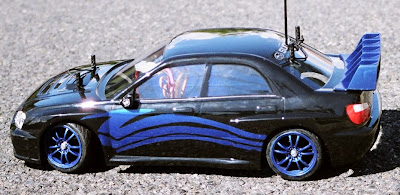 I have a bad habit. When I discover a new hobby I get into it head-long. I buy everything I could possibly need thinking that this hobby will be my time-filler for the next few years. The remote control car(above) is a perfect example. Buying the car, its controller, batteries and charger, the paint and assembling it wasn't good enough. I had to buy all the modifications needed to make the car competitive on the track. I knew there was an amateur division but I didn't care. I wanted it all! A few weeks of going to the track to practice and subsequently being chased off by professionals, and the novelty had worn off. The car now does what most RC cars do: Race around small traffic cones in the driveway.
So what I do now is ask around. Find out if any of my friends have tried it and if they have the equipment for me to borrow, or know where I can rent it for a few days. Many times my friends say I don't even need all that stuff. Just get the cheapest {name item here} and you'll do fine. The rest can come later.
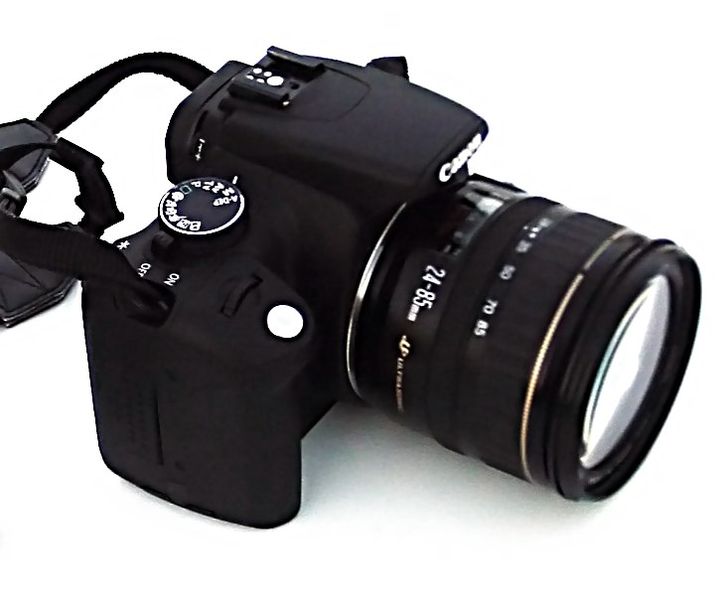
Most product ranges also have an amateur item in its range. For instance, in the digital photography (I still think that's an oxymoron) industry Canon has the Rebel XT, which costs less than some compact digital cameras and provides all the features needed by even professionals, the main disadvantage being the rate and number of photos that can be taken in succession in a single go. I think 8 megapixel is more than enough for a good photo.
So the moral of the story is as follows: If there's something you want to try but you think it will be expensive, ask around first. See if you can rent what you need, or buy second hand, or borrow from a friend. And most of all, do you even need it all?
Let's begin with a question: How much stuff do you have lying around the house that you never used, but thought it essential for whatever you're planning? What made you buy it? A television advert? Probably. Maybe you deduced that all this stuff is needed because they always have all this stuff in the movies. You're falling into exactly the trap the marketers want.
Companies want to sell their gear. Gear that is functionally identical to the next company's product. And who will be the softest victim? A layman. "Trust me, you're going to need this." This is usually a lie. Most hobbies or sporting activities can be gotten into without expensive equipment. And if special equipment is needed, such as climbing gear, ice skates, ten pin bowling shoes and balls, there is most likely a company or venue that lets you rent it for a few hours. It makes business sense. They want more people involved so they make the expense of starting out as little as possible.
When it comes to confusing the general public into buying stuff geeks are the biggest offenders. When you walk into a computer store you're bombarded by reasons why your computer isn't good enough and what you can buy to make it better. The truth is most of it does nothing special and you would only notice the difference when you're a semi-professional. You don't need a laser gaming mouse with a specially designed mouse pad and a gazillion buttons if you're only going to play Bejewelled with it. You don't need the fastest graphics card on earth if you just want to play the occasional game. Granted, it won't run as fast or as prettily as the top-of-the-range machines, but with casual games you won't even see a difference.
 I have a bad habit. When I discover a new hobby I get into it head-long. I buy everything I could possibly need thinking that this hobby will be my time-filler for the next few years. The remote control car(above) is a perfect example. Buying the car, its controller, batteries and charger, the paint and assembling it wasn't good enough. I had to buy all the modifications needed to make the car competitive on the track. I knew there was an amateur division but I didn't care. I wanted it all! A few weeks of going to the track to practice and subsequently being chased off by professionals, and the novelty had worn off. The car now does what most RC cars do: Race around small traffic cones in the driveway.
So what I do now is ask around. Find out if any of my friends have tried it and if they have the equipment for me to borrow, or know where I can rent it for a few days. Many times my friends say I don't even need all that stuff. Just get the cheapest {name item here} and you'll do fine. The rest can come later.
Most product ranges also have an amateur item in its range. For instance, in the digital photography (I still think that's an oxymoron) industry Canon has the Rebel XT, which costs less than some compact digital cameras and provides all the features needed by even professionals, the main disadvantage being the rate and number of photos that can be taken in succession in a single go. I think 8 megapixel is more than enough for a good photo.
So the moral of the story is as follows: If there's something you want to try but you think it will be expensive, ask around first. See if you can rent what you need, or buy second hand, or borrow from a friend. And most of all, do you even need it all?
Words:
"Do you suck at saying "u suck"? A gentleman is always three things:
1) Original
2) Grammatically correct and
3) A gentleman
Call foes something a bit unusual. They'll be thrown if they get it and revealed as an idiot in front of their peers if they don't."
-PC Gamer, April 2007 regarding DefCon

 Posts
Posts

