Showing posts with label hobby. Show all posts

Wednesday, 19 August 2009

Board Games

When I say board game the first thing that popped into your head is probably Scrabble or Monopoly. Though these are both brilliant games, it's not nearly an accurate description of the phrase. Before computers, TV or even radio, board games were one of the most enjoyed indoor pastimes. Some board games have prevented all-out war between nations. Some games have remained unchanged for millennia. And still today board games are a popular pastime in the slightly-less-than-mainstream circles, global sales climbing 23.5% in 2008.

Broadly speaking you can split board games into a few categories, which I'll cover one at a time.

Abstract
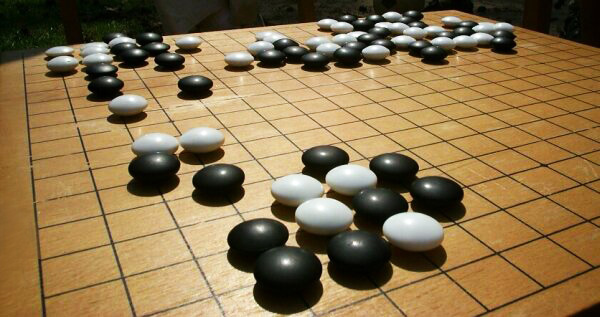
These games tend to focus on strategy more than story. Almost everyone can play Chess to some degree, but it's not nearly the only game of its kind. A personal favourite of mine is Go, a Japanese game that evokes the same strategic thinking as Chess but with far simpler rules and a certain degree of elegance that few games can achieve. Another 2-player game I enjoy is Mancala, an old African/Asian game of moving marbles or stones around little pots. For its simplicity in rules there is some amazing strategic depth.

Party Games
It happens every so often that I would be hanging out with friends and a bottle or two of wine, and someone would say "Hey let's play 30 Seconds!" This is a typical party game. Easy to learn, fun to play, with little downtime between turns. Another good example is Clue (I still have a copy called Cluedo, when it was British). Party games tend to finish in under an hour, before it becomes repetitive.


Family Games
Games that are easy to learn and easy to play, and often don't require quite as much strategy. Good examples would be Boggle, Scrabble and Upwords (pictured above). Most family games also make good party games, such as Pictionary.


Eurogames
This is where I got into board games. Eurogames derive the title from the fact that the first games of this style came from Germany and became very popular very quickly. The games tend to have a basic back story to give context and theme, but what makes them most intriguing is that each game has a unique gameplay mechanic that is found in very few other games if any. The most famous eurogame is Settlers of Catan, but Carcassonne, Ticket To Ride (links to video review) and the newcomer Dominion are all worth a mention.

Fantasy Games
These games sacrifice simplistic rules for depth of story and intense scenarios. The games tend to play longer (2-6 hours) and have a very thematic style, usually fantasy but sometimes based on a TV series or game. I wouldn't recommend these games to the beginning board gamer, but if you've played Magic: The Gathering or some form of roleplaying such as D&D you'll fit right in here. Actually, the World of Warcraft game is quite popular... My friends and I have been playing Runebound (pictured above), which is an RPG in board game form. There's also a game for Battlestar Gallactica that many people are raving about.


Wargames
Warning: Only for the hardcore. These games typically take months of buying units, painting them and researching combat strategies. The rules are complex enough to emulate real-life warfare. If you enjoy RTS games you can try this, but it's not for the beginner or even intermediate player, and you'll need quite a bit of cash to get started. The most famous in this genre is Warhammer 40,000 (pictured above). There are also boardgames that give the same type of combat style without the hassle of amassing an army, though the games can still take a few hours to play. I would recommend HeroScape(very pretty) or Warriors of God.

So to conclude, I believe there's a board game out there for everyone. And once you're hooked you'll keep looking for something "the same but different", that will slowly introduce you to the wonderful world of board games. Places to go for more information would be BoardGameGeek, Board Games With Scott and The Dice Tower.

What board games do you enjoy? Comments welcome.

Tuesday, 28 July 2009

Musicality And Everyday Life

I don't know a single person that doesn't listen to music in some form, whether it's the iPod in your pocket, on the radio or going to clubs. But music has benefits other than providing a backtrack to your daily life.

I'm a musician. I live for my music and I've noticed over the last few months that a sense of musicality helps you in an everyday capacity. You learn rhythm, timing, pitch... You even learn to listen.

Let's start with the basics. If you play an instrument you learn rhythm. This is an invaluable skill when you learn to dance, but is also handy in things like modelling, where you want even, smooth steps. You also learn to predict things more accurately. "1, 2, 3!" If counted at regular intervals, everyone knows when 3 is going to land because the gap between 1 and 2 is the same as 2 and 3.

Timing. The first example I can think of is knowing how long it'll take for a traffic light to change. It's an internal sense of how long things take to happen. It prevents you from jumping the gun, running a red light that changes moments later. It even helps comedians to pause for the exact length of time for comedic effect.

Pitch. If you can play an instrument you can tell when something changes pitch. Did you know that a flat tyre makes a lower sound than a properly inflated tyre? A glass or mug with a chip also produces a different sound.

And this brings me to my last point. You learn to listen. When you study music, they often let you listen to a song and pick out specific instruments or sounds. This skill is handy in all kinds of ways. I've been able to work out what's wrong with my car simply from the sounds it makes. Speaking of cars, I've saved myself from getting run over twice because I heard a car approaching behind me, even through the noise of other cars.

When I was younger, watching TV, I would often turn off the sound and listen for the sounds my mom were making in the house, then guess what she was doing. It was a fun game, but it taught me of the little sounds everyday objects make.

Computers also make sounds. When I sit in bed with my laptop, I sometimes position it in a way that cuts off the airflow into the machine, but withing a few seconds I would notice the hum kick in of the internal fan trying to keep the thing cool, and I know it's suffocating. You can hear the hard drive in a computer churning when it's copying things. When you think the machine has frozen you tend to panic and start pressing buttons. "But wait, the hard drive is still churning. Maybe it's just busy." And invariably it wakes back up when it's done with whatever it was doing.

Besides being a backtrack to your life, music is a skillset. I use my musicality on a daily basis and I'm very thankful to my parents for affording me every opportunity available to develop it.


Words:
"Seriously, we should give up on the idea of anything mainstream because pop culture has splintered into a thousand things and will never be put back together."
-Robert Ashley, guest on Gamers with Jobs Conference Call Ep 126


Sunday, 11 January 2009

Puzzles

When last did you build a jigsaw puzzle?

Can you even remember? It's something our parents did. Or not even. Maybe you remember visiting your grandmother's house and there was an uncompleted puzzle on the dining table. But why don't we see puzzles anymore?

Because kids play computer games and consoles, that's why. You even get jigsaw puzzle games! I've said many times that I am a gamer. I'm not ashamed of it. But I know you can't spend your entire life behind a monitor. Use your hands for once!

Puzzle building has some very important skills to teach, the most obvious ofwhich is pattern recognition and being able to notice a part of something even when presented seperate from the whole. It also improves hand-eye coordination, dexterity and visual memory.

Then there are secondary skills you learn, like planning:
If you're searching for a specific piece but can't find it, maybe you should try building around that piece and getting some more imformation on its shape, or leave it for the time being and try somewhere else. Sometimes you can gather all the pieces that "look like sky" to narrow down your search. That's problem-solving right there!

It also destresses because you can calmly sit and scan the pieces for the one you're looking for. And it's addictive. When you keep finding a piece every few minutes, whole afternoons can fly by. Every time you find a piece it feels like you're getting somewhere and you only need a few more.

Not to mention the amazing artwork. This picture is the puzzle we just finished. When you first look at it you think "but it's all the same colour!". It's not. The clouds in the sky are smooth, the sea is rough. The ghost ship is a very distinct white. Even the lace on her dress allows you to find similar pieces.

I bought my mom a world globe puzzle a year back. Yes, the puzzle is three-dimensional. I've also seen some interesting games made from puzzles. My aunt has a puzzle that doesn't have a picture on the box. It's a murder mystery. You read the little story of how the people came to be in the house, heard the gunshot and found the body. Then the puzzle is the crime scene and as you build you discover the killer's identity.

Jigsaw puzzles are extremely underrated as a pastime. I think everyone should have at least one puzzle in their house at all times, even if you never build it, your children or friends might. And as soon as they do you'll be hooked. Puzzles are cheap in comparison to other games, and will keep you entertained for much longer than a stupid DVD...


Words:
“There are no extra pieces in the universe. Everyone is here because he or she has a place to fill, and every piece must fit itself into the big jigsaw puzzle.”

Sunday, 5 October 2008

Like Chess But Different


Go is a strategic board game for two players. It differs from chess by only having one type of playing piece. What it shares with chess is an infinite complexity.

For me, and many others, it all started with an animé: Hikaru no Go. The series follows a young boy through the trials and tribulations of playing Go, making it through school, trying to start a Go club and playing in tournaments. Not only was it a really well-executed animé, it also managed to make a relatively mundane board game appear epic. According to Wikipedia:
The manga is largely responsible for popularizing Go among the youth of Japan since its debut, and in other areas such as mainland China, Hong Kong, Taiwan, and South Korea. More recently it has gained much popularity in the United States.
So after watching the animé, I did a little reading and shopped around for a goban, but couldn't find any at nearly a reasonable price. The only place I could find was online, and that was too expensive. So I made my own. A nice wide plank of pine, a ruler and a carver's V-tool took me half an hour to make it. Then a little inking to make the lines sharper and a coat of varnish. I then bought two bags of glass stones, a bag clear and a bag blue. And there you have it, the poor-man's goban.

I consulted my encyclopedia of games (one of the most important books on my bookcase) and off we went. The animé also had a 5-minute lesson at the end of each episode, which helped a lot with the basics. My friends and I now play regular games. The game is quick to pick up, but it can take years to even realise the depth of the game.

If you have a chance, I would encourage anyone and everyone to watch a few episodes of the animé, or read the manga (can be read online at onemanga.com). Then you can try your hand at the game, through the Internet Go Server (a.k.a. PandaNet).


Words:
"When did this square become a meeting place for go players? I don't know. After so many thousands of games, the chequerboards engraved on the granite tables have turned into faces, thoughts, prayers."
- The Girl Who Played Go, Shan Sa


Sunday, 28 September 2008

Good Old Days

It turns out that there are still many people that enjoy a good game of pen-and-paper roleplaying.

So I went in search of my old player's manual for Vampire: The Masquerade(pictured left). Upon finding my old character sheet the memories and nostalgia came flooding back, of late nights in a small theatre with a group of drama students pretending to be vampires. The epic adventures that played out there were the stuff of legend.

But what makes the games by White Wolf so amazing (and a little scary) is the fact that these future-changing revolutions could be taking place right under our noses, for real, and we would never know...

I called up a few friends and asked around and everyone seemed keen, so we all got together one evening with the player's manual and worked out our characters. We all then spent the next week thinking about our characters and developing them from mere pieces of paper to living (I use this term lightly) breathing members of society.

If you're familiar with Dungeons & Dragons you'll know how most roleplaying games work: The chronicler (a.k.a. narrator a.k.a. dungeon master) tells the story up to a point, then stops. It's the duty of each player to state what their character would do in that situation. A few minutes of stats-comparing and sometimes arguing commences, followed by a round or two of dice-rolling (with dice that have between 4 and 20 sides). Then the story can continue based on their successes or failures. What made The Masquerade unique in its day was focus on the theatrical more than the mathematical. Your character sheet was only there as a reminder. The real character, with full background story and entire family trees and political structures, was in your head. During play, when a challenge is presented a quick calculation and a single dice-roll is all that was needed to find out what happens. The story can then continue. It made for much faster paced gameplay and much more amazing stories. And indeed, the stories were told, because when you retell the tale of your adventure you portray it as if you are the person who experienced it, not the character sheet!

Over the last week I've been combing the internet for information on The Masquerade, but it was replaced by a game called The Requiem(pictured right). No longer are the vampires an entity on their own. They are part of a much greater and sinister system known as the World of Darkness in which anything can happen, from ghosts to werewolves, in the tradition of horror stories the world over. I'm doing my best to find the books required to start playing the newer game, but not before the adventure of our Masquerade has concluded, which can take up to 3 months of weekly meetings.

With PC and console games as sophisticated as they are these days, it's good to know that we can still enjoy a good old-fashioned game of pretend, even if it is with some help...

The games also encourage you to read, so I find it especially suited for players in their low teens who are still in touch with their imagination, but who get bored when reading a book like we old people (early twenties). Once you've played a few hours with friends, you start wondering about the story behind the story. And it's all there. Beside the player's manuals and a guide for storytellers, there's a whole selection of books that widen the fictitious universe. Some of them have nothing to do with how the game is played, but are simple storybooks that serve to enrich the mental image you have of this world beneath our everyday lives.

However, it's not for everybody. The whole theme of this genre is very dark and brooding. If you struggle to keep a straight face while telling a ghost story, you would be better off playing a science fiction or fantasy game. World of Darkness is for the goths among us. Serve with Paradise Lost, My Dying Bride, Anathema and especially Katatonia.

To Close: If you've never played a pen and paper roleplaying game, there's a very big gap in your education. In my opinion it's something that everyone needs to do at least once in their life.


Words:
"The cleansing astringence of rejection" is the most ridiculous phrase I have ever used in a comic."
-Questionable Content


Sunday, 31 August 2008

Wants and Needs...

When I posted about making good purchases 2 weeks ago, I touched on the point that you don't always need to buy what you're considering. Time to explain.

Let's begin with a question: How much stuff do you have lying around the house that you never used, but thought it essential for whatever you're planning? What made you buy it? A television advert? Probably. Maybe you deduced that all this stuff is needed because they always have all this stuff in the movies. You're falling into exactly the trap the marketers want.

Companies want to sell their gear. Gear that is functionally identical to the next company's product. And who will be the softest victim? A layman. "Trust me, you're going to need this." This is usually a lie. Most hobbies or sporting activities can be gotten into without expensive equipment. And if special equipment is needed, such as climbing gear, ice skates, ten pin bowling shoes and balls, there is most likely a company or venue that lets you rent it for a few hours. It makes business sense. They want more people involved so they make the expense of starting out as little as possible.

When it comes to confusing the general public into buying stuff geeks are the biggest offenders. When you walk into a computer store you're bombarded by reasons why your computer isn't good enough and what you can buy to make it better. The truth is most of it does nothing special and you would only notice the difference when you're a semi-professional. You don't need a laser gaming mouse with a specially designed mouse pad and a gazillion buttons if you're only going to play Bejewelled with it. You don't need the fastest graphics card on earth if you just want to play the occasional game. Granted, it won't run as fast or as prettily as the top-of-the-range machines, but with casual games you won't even see a difference.

I have a bad habit. When I discover a new hobby I get into it head-long. I buy everything I could possibly need thinking that this hobby will be my time-filler for the next few years. The remote control car(above) is a perfect example. Buying the car, its controller, batteries and charger, the paint and assembling it wasn't good enough. I had to buy all the modifications needed to make the car competitive on the track. I knew there was an amateur division but I didn't care. I wanted it all! A few weeks of going to the track to practice and subsequently being chased off by professionals, and the novelty had worn off. The car now does what most RC cars do: Race around small traffic cones in the driveway.

So what I do now is ask around. Find out if any of my friends have tried it and if they have the equipment for me to borrow, or know where I can rent it for a few days. Many times my friends say I don't even need all that stuff. Just get the cheapest {name item here} and you'll do fine. The rest can come later.

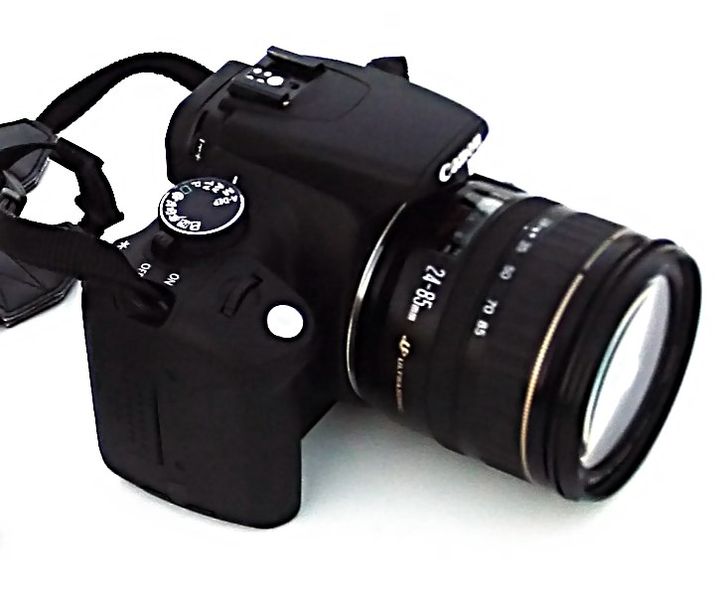
Most product ranges also have an amateur item in its range. For instance, in the digital photography (I still think that's an oxymoron) industry Canon has the Rebel XT, which costs less than some compact digital cameras and provides all the features needed by even professionals, the main disadvantage being the rate and number of photos that can be taken in succession in a single go. I think 8 megapixel is more than enough for a good photo.

So the moral of the story is as follows: If there's something you want to try but you think it will be expensive, ask around first. See if you can rent what you need, or buy second hand, or borrow from a friend. And most of all, do you even need it all?


Words:
"Do you suck at saying "u suck"? A gentleman is always three things:
1) Original
2) Grammatically correct and
3) A gentleman
Call foes something a bit unusual. They'll be thrown if they get it and revealed as an idiot in front of their peers if they don't."
-PC Gamer, April 2007 regarding DefCon


Wednesday, 2 July 2008

Analog to Digital

I've kept the faith for so long, but I knew at some point technology would overtake nostalgia and my beloved SLR camera would be replaced by a digital equivalent.

As with all technology, eventually it will be replaced by something more suitable to our everyday life. The reason I stuck with a film-based camera for so long is called brightness latitude. It's the amount that you can overexpose or underexpose a shot and still be able to recover a good shot from it. The easiest example would be a photo of a candle-lit dinner. If you overexpose the shot your subjects would be well lit, but the candles and the immediate surroundings would "white out", appearing as a bright blob. If you underexpose the shot the candles look great but the table and faces of the people would be in darkness. When working with film, you're transferring light onto a medium. You could then in post-production over- or underexpose certain areas to fix the problem.

An increasingly trendy technique in digital photography known as HDRI has solved this problem. You take 2 identical shots, one under- and the other overexposed. You then overlay the 2 images and select the correctly lit areas from each to create the final image. It's a great trick and can produce some stunning shots, but it usually requires your subject to remain motionless between shots.

Don't get me wrong, digital has its place. You wouldn't want to go all happy snappy at a party with your film camera, simply because it's easier to use a small digital camera. Usually people want to see the picture you just took aswell, and with film you can't show them.

Cheaper digital cameras also don't have a proper viewfinder. You're forced to use the little LCD screen on the back. Any photographer worth their salt will perhaps use the LCD for composition, but will always refer to the proper viewfinder before taking the actual shot. This is why I originally bought an SLR camera, because what you see in the viewfinder is what comes out. With cheaper cameras the viewfinder is slightly offset from the photo lens and can be very annoyingly uncalibrated.

Yesterday I spent about an hour messing with one of the latest dSLR cameras and for the first time I felt like this camera was capable of expressing my ideas the way I want, without holding me back. This notion, coupled with the faster turn-around time and generally digital methodology of almost everything these days, convinced me that the time has come.

Like video killed the radio star, so has digital cameras reshaped our notions of photography.


Words:

"You're much too pretty, you don't need your mind."
- Fallen by Seether (Finding Beauty in Negative Spaces)

Saturday, 14 June 2008

A Knife Can Save Your Life

This morning I received a phone call from my sister asking if we would like to join them in visiting the Cape Town Book Faire. I'd wanted to go but my girlfriend and I didn't feel like going on our own, so when they offered to join us we changed our mind. However my sister wanted to stop by a specific shoe store on the way.

While perusing row upon row of boots and shoes I was stricken by the call of nature, so I excused myself and went in search of the restrooms. I went in, occupied a cubicle and went about my business. It was only when I was preparing to leave that I discovered the latch on the door was broken and had gotten stuck in the locked position. I proceeded to fiddle with the latch to try and knock something into place on the inside, but to no avail. When no alternative remained, I took out my Swiss Army knife (Victorinox Spartan pictured left) and unscrewed the lock from the door. I noted that the screws were slightly stripped, as if they'd been repeatedly removed and reinserted.

When the lock came off, I turned it over. The latch had slipped out of the little bracket holding in in line, so the locking mechanism wasn't engaging the teeth to pull open the latch. The door swung open easily and a cleaner was busy by the urinals. I called him over.

"Excuse me. This lock broke while was in there. If I didn't have my knife with me I would've been stuck. Look, the screws are damaged so I don't think it's the first time this lock has gone. Please have it replaced."

He nodded vigorously and promised his immediate attention. Whether he seized the opportunity to leave the urinals was none of my concern, as long as the matter was taken care of. As I washed my hands an oldish man, seemingly of "boer" descent, mumbled to himself, but loud enough for me to hear: "As jy ooit 'n rede nodig gehad het om 'n mes saam met jou te dra, is daai 'n goeie een." (If you ever needed a reason to carry a knife, that's a good one.)

In this modern age we underestimate the value of a simple object such as a good pocket knife. I can't think of a single day I don't use my knife for something, be it opening a package or sharpening a pencil. I've even used it to pry open a cellular phone to retrieve a SIM card when the phone was obviously not designed to be opened. For Christmas I bought my girlfriend a small Victorinox MiniChamp (pictured right), which has more feminine things such as a decent nail file, a ballpoint pen and the classic Swiss Army tweezers. I have never found tweezers quite as well suited for getting small thorns or hairs out of your skin.

My Swiss Army knife is accompanied by a Victorinox SwissCard (left) and a small sewing kit. I go nowhere without them. And for the nervous parent out there, why won't you give your son a proper knife? Until he's accidentally cut himself a few times, how will he learn how to handle a sharp object? There are many small "survival tricks" that children simply don't learn anymore. The things that the Boy Scouts or Voortrekkers would've taught them. Life skills that any man should know, even if only from a purely logical point of view, such as basic mechanics.

That's why I'm such a fan of old-fashioned toys, such as Meccano. It teaches you that everything in this world is made up of smaller things that are interlinked. When something goes wrong it's not always broken. If you know how basic mechanics or electronics work you can decipher the internal workings and fix it.

There's nothing quite like the elation of fixing something that seemed completely broken.

A book I can recommend to any parent for their son would be The Dangerous Book for Boys. Who knows, it may save your life...


Words:
"Tears are the weapons of the weak and the condolence of the powerful."
-Empress, Shan Sa


Tuesday, 12 December 2006

My new hobby

I've started playing with Blender, a free and open source 3D modelling and animation application. The kinda stuff they use to do animated movies like Over the Hedge and Finding Nemo and so on.

My first project was this little amulet I wear around my neck. It's a cross shaped like a minora blade. My sister gave it to me for my 21st birthday and I only take it off for kickboxing, showering and sleeping.

And this is how it turned out...


Click to enlarge please.