Showing posts with label IT. Show all posts

Tuesday, 28 July 2009

Musicality And Everyday Life

I don't know a single person that doesn't listen to music in some form, whether it's the iPod in your pocket, on the radio or going to clubs. But music has benefits other than providing a backtrack to your daily life.

I'm a musician. I live for my music and I've noticed over the last few months that a sense of musicality helps you in an everyday capacity. You learn rhythm, timing, pitch... You even learn to listen.

Let's start with the basics. If you play an instrument you learn rhythm. This is an invaluable skill when you learn to dance, but is also handy in things like modelling, where you want even, smooth steps. You also learn to predict things more accurately. "1, 2, 3!" If counted at regular intervals, everyone knows when 3 is going to land because the gap between 1 and 2 is the same as 2 and 3.

Timing. The first example I can think of is knowing how long it'll take for a traffic light to change. It's an internal sense of how long things take to happen. It prevents you from jumping the gun, running a red light that changes moments later. It even helps comedians to pause for the exact length of time for comedic effect.

Pitch. If you can play an instrument you can tell when something changes pitch. Did you know that a flat tyre makes a lower sound than a properly inflated tyre? A glass or mug with a chip also produces a different sound.

And this brings me to my last point. You learn to listen. When you study music, they often let you listen to a song and pick out specific instruments or sounds. This skill is handy in all kinds of ways. I've been able to work out what's wrong with my car simply from the sounds it makes. Speaking of cars, I've saved myself from getting run over twice because I heard a car approaching behind me, even through the noise of other cars.

When I was younger, watching TV, I would often turn off the sound and listen for the sounds my mom were making in the house, then guess what she was doing. It was a fun game, but it taught me of the little sounds everyday objects make.

Computers also make sounds. When I sit in bed with my laptop, I sometimes position it in a way that cuts off the airflow into the machine, but withing a few seconds I would notice the hum kick in of the internal fan trying to keep the thing cool, and I know it's suffocating. You can hear the hard drive in a computer churning when it's copying things. When you think the machine has frozen you tend to panic and start pressing buttons. "But wait, the hard drive is still churning. Maybe it's just busy." And invariably it wakes back up when it's done with whatever it was doing.

Besides being a backtrack to your life, music is a skillset. I use my musicality on a daily basis and I'm very thankful to my parents for affording me every opportunity available to develop it.


Words:
"Seriously, we should give up on the idea of anything mainstream because pop culture has splintered into a thousand things and will never be put back together."
-Robert Ashley, guest on Gamers with Jobs Conference Call Ep 126


Saturday, 14 March 2009

Encyclopedia?

I don't even remember when I first heard of Wikipedia, but in the last year it's become a part of every net-user's daily life. When you wonder about something, you go to Wikipedia. I've even got a shortcut to it on my phone's home page.

Why? Because it's reliable. Contrary to a certain spoof video (funny even though I disagree with it) the facts are almost always straight. For every user posting random information there is a hundred users correcting it and providing citations to support it. Wikipedia is famous because it's accurate, and it's accurate because it's famous. I've seen pages updated within literally minutes of something happening. Where else would you get this kind of information?
That's exactly my point. Without Wikipedia, where would we get our information? From a hard-copy encyclopedia that's incorrect the moment the editors are done with it? With the coming of the "Data Age", as I like to call it, internet access (and by extension access to information) is available almost anywhere. Are we leaving behind the encyclopedia? Is the process of validating information for print too slow for our needs?

Many blogs operate on the First Post principle. As soon as they catch wind of a rumour, they publish it on their blog. It's the internet. You can always go back and update it when you have more information, but the prestige of being the first publication to announce something makes it a risk worth taking. In a way Wikipedia is the same. As soon as something happens, a user thinks "I probably need to put that on the page" and off they go. If it's incorrect, another user (or the same user) will go and correct it. Because of this, you can go check how many people watched the last episode Lost, literally hours after broadcast.
So is Wikipedia the ultimate and only? No. Why is it the sole source of information on the internet, even maybe the world (because even newspapers now cite it as reference)? Because it provided the right service at exactly the right time. The problem with the internet was, yes there's all the information you will ever need, but are you going to sift through pages of search results pointing to news articles and rumour blogs to find what you're looking for? Wikipedia gives a single point of contact for information, which is then presented with definitions and basic information first, filtering into detail as you read.

As with everything, there is competition, other companies doing the same thing. Google launched Knol. It's essentially Wikipedia, but articles are based on topics and theses rather than defining a concept, and are supposed to be written by an expert in the field. There are some good articles, but when I want to know what films Stanley Kubrick(yes it's linked to the Wikipedia page) made, I'm not going to find it on Knol.

About now I usually make my closing argument. This time it's easy. To write this article, I opened Wikipedia 12 times to check references. That's all you need to know.
Also, if you're the type of person that gets involved in high science arguments over a few drink(happens every weekend), Wikipedia and a cell phone that can access it is an essential part of winning an argument.


Words:
Picture this time...
The Problem with Wikipedia

Sunday, 22 February 2009

TV and Plugs

I first noticed it with Mythbusters. "We didn't only perform these tests. To see what else we got up to, go to your website on..."

It's a plug, like so many others. It's been there for ages. But ever since the internet can handle video, they've been hinting at further content. During season 4 of Battlestar Galactica the same thing happened, but they hinted that there are further scenes. Time Warp says that they performed more experiments than they can put in the disappointingly short show, which is quite believable.

However: At what point do they start depriving from the television episodes to bring traffic to their website? It's all fine if they put deleted scenes on the website, but did they purposefully cut those scenes from the episode to generate traffic to their website? Are they important? Are you still getting the full impact of the show if you don't go watch that part online?

It makes sense to drive people to your website. After all, when you have them there, you can sell stupid merchandise to them such as actual Cylon toasters.

What about webisodes? Battlestar Galactica had several seasons of between-television-season episodes. In my opinion the shows didn't greatly impact the way you interpret the next season, but are they a part of the story? Or simply fan fiction with publicity? All they really did was show a little more depth of the situation leading into the next season, to whet the apetite of a prospective audience. 

I think it's fine to have extra footage on the website, as long as it sticks by one of two conditions: The footage is not an integral part of the show, or is included on the box set upon release. When you buy the set, you want everything. In five years' time when you feel nostalgic, you won't be able to find those webisodes again.

We must be wary of this trend. I fear the day I watch Survivor and at the end of the show they say "To see who gets voted off, go to our website". It would mean the end of television as we know it...


Words:
This will be my first post without a relevant quote at the bottom. However, I read this during the week and found it funny:
"Last night I stayed up late playing poker with Tarot cards. I got a full house and four people died"
-Stephen Wright


Saturday, 29 November 2008

With Vilest Worms To Dwell

If you've played PC games, there are two games that you will know of. Even if you haven't played them yourself, you know of them. The first on is easy: The Sims. The second one I'm sure you won't guess, but you will recognise it.


My first experience of Worms was when I was 11. I got Worms Reinforcements for Christmas and my two cousins and I played staight through the night until the sun came up. 

What intrigued me about the game was its learning curve. You scale to the game, instead of the game scaling to you. I know it sounds backwards, but allow me to explain: Generally when you play a game they start you out with simple challenges so you can learn the ropes. Then they slowly step up the difficulty so that you're always challenged. In Worms, the game mechanics stay exactly the same. But as you get to know the weapons and how they work, you start making more daring moves, often risking the life of your own worm in pursuit of the enemy. Of course you can scale the abilities of your opponents, and which weapons are allowed when, but how the weapons function and how you use them never changes.

And the most important fact of the game: No matter what weapons you have or how devestating their effect, your enemy can always take you down with a bazooka and a grenade. Because these weapons require time to master. To throw a grenade halfway across the map into a hole no wider than the grenade itself is a feat very few can achieve. And bazooka rounds are affected by the wind, allowing you to shoot around corners

What's best of all, is that the game is turn-based. You only need a single computer, a single set of controls, and a single copy of the game to enjoy it with friends. This post came about when we had the idea of playing on the projector. 3 meter wide total wormage!  

The version we're playing is Worms Armageddon (cover pictured below), and is my personal favourite of the series. Even though the game came out in 2001, it runs perfectly on Windows XP and Windows Vista. And the ability to set any resolution means you can play in HD. Later versions of the game became 3D, making it more modern in concept but harder to aim and shoot as effectively as the original 2D game. It also means having to use the mouse and keyboard much more. When we play on the projector, I map the keys to my Rumblepad so we can pass it around easier.


I would urge anyone to try this game, or its many derivative works, for themselves. Links listed on the wikipedia page. And don't worry about violence. It's cartoony graphics. I've seen Road Runner cartoons with more violence.


Words:
"So if reality gets in the way of fun, fun wins."
-Gamers With Jobs Conference Call, Episode 111


Sunday, 16 November 2008

Piracy Makes Games Suck

I'm a geek. I'm not shy about that fact. Being a geek means you have friends who are geeks. Having friends who are geeks means that when a new game or movie comes out, you're sometimes offered a copy before it's even been released. Piracy is big, especially in the PC gaming world. Less so for console games, but don't think it doesn't happen.

Games are expensive. It's a fact. If you take into account the level of quality people want in their games these days, and what it costs to make them, it's not surprising the unit price is so high. And don't tell me movies are cheap games should be. In movies they only have to worry about how it looks, not what'll happen if the player decides to do something ridiculous. 

So when you're offered an opportunity to play the game, no strings attached, before you pay for it (if ever), people tend to go for it. But what are you missing?

Many times the process of cracking the game breaks some aspect of the game. Things like online play or achievements. In some cases the game may crash because of the workarounds involved. Some people may seize the opportunity to plant and distribute their virusses through these "cracked copies". Often, in an attempt to crack the game before the official release date, an unfinished or reviewer's copy of the game is used, which may include critical errors. Cracked games can also not be patched, leaving it open to vulnerabilities or flawed gameplay. For the online play that did work with the cracked version, the fact that you can't patch it means that now you can't play online because the servers require you to have the latest fixes installed.

And worst of all, your experience of the game is tainted. 

As a programmer I know how it goes. You sit for days writing a small part of the game or program, but you can't get it perfect. You've been working so hard on the whole project that you think this little problem can be fixed later, or is really not so bad. So someone gets a pirated copy of your game. They didn't pay for it so they're willing to install it and try it for an hour or two. If they don't like it, they skip it. Or worse yet, they go onto public forums and discredit your game because of that small niggle in gameplay you decided can be left. They are in general more critical of the game.

If they had payed for the game, they would see the niggle, but think to themselves "It's really not that bad. The rest of the game makes up for it. It's a good experience in general." Because they payed for it, they want to get their money's worth so they give the game a proper chance.

Personally, I enjoy a game more if I have the physical package I can put on my shelf. Often the game comes with some special trinket, or there's a collector's edition. It makes it an experience instead of a pastime while you wait for your pizza to be delivered or whatever.

The last problem I have with piracy is DRM. I know it sounds backwards, but it's simple. When games are pirated, the producers don't get money for it. So they need to stop a game from being pirated. They end up licensing outside software to do it for them (Starforce or SecuROM). These methods are never perfect because no two computers are set up the same, so by doing so you introduce a margin of failure to your games: a number of buyers for whom the game will not work because something on their computer isn't how it should be. In some cases it also introduces an install limit. Someday I'm going to look at an old game and think "I want to try this again", but when I try to install it, the game will firstly require internet access to a service that may no longer be available. If that service is still there, it may tell me that I've installed the game too many times. How can this be? I'm sitting with the disc in my hands. I payed for it. The slip is still in the case, although the writing has faded a bit... If I pay these exorbitant amounts for my game, I expect it to work when I want it to.

Even games with DRM gets cracked. Sometimes the DRM is only there to stop it from being cracked on release day, but it will be cracked within a week. However, it ruins the game for years to come.

Unfortunately piracy is here to stay. Unless they can find a way to make sure you can't do anything without a legal copy (WoW did it) you can really only rely on people's good faith and support.


Words:
"In the case of pirates, say, I would like to know whether that profession of theirs has any peculiar glory about it. It sometimes ends in uncommon elevation, indeed; but only at the gallows."
-Herman Melville

Sunday, 9 November 2008

Isolation

Five years ago when I had just gotten my driver's license, I used to get annoyed at my mom. She would pester me with reminders such as looking for emergency phones when driving far, and keeping track of petrol stations and truck stops even if I don't stop at them. I found it very irritating. But if something were to happen to me out on the road, that was the one thing that could save me. Because five years ago, I didn't have a cellphone.

I didn't have a phone because if I needed to speak with someone, I went there and found them. If I wanted to buy something, I went to a shop where I spoke to a person. If something happened to me out on the road, I walked to the nearest truck stop or emergency phone.

These days everything is virtual. If I read (on the internet) about a game that I think I'd enjoy, I go to Take2 (on the internet) and order it. It then gets delivered to my house a few days later. You can buy literally anything online these days, even groceries. I even rent DVDs online. When you're out on the road, you drive with all your windows shut tight so the aircon can do its thing. You look out at the world like it's a movie, or some display in an aquarium. You don't interact with the outside world or with other people. It's your little adventure.

You don't go to someone's house, you hook up online. As I say this, I consider running Google Talk and checking who's at home.

I work for a company that sells services. Internet connectivity, websites, bulk e-mail, etc. Beside the fact that we don't have physical stock to put on a shelf, we don't need a shop front because no-one would ever come. People order services on our website. They pay for it with a credit card. If something goes wrong they e-mail us. If it really goes wrong they phone our support people.

It's sad, really. We all go on about going green and being environmentally friendly, but we isolate ourselves from the outside world. Not just from nature (heaven forbid a single bug should make it past the windowsill) but also from each other.

I think we prefer it that way because we don't have to deal with uncertainties. Facial expressions, body language and tone of voice are gray areas, open to be misinterpreted. If it's there in writing in my inbox, how can I get it wrong? For a perfect example of doing things online instead of going out and living it up, read the quote below. (Sorry Jeff, I love your posts but you're a geek)

Do yourself a favour. Next time you want to buy something, instead of just going online and ordering it, go into a shop and buy it. Walk in, find yourself a nice friendly store clerk that knows what they're doing, and communicate.


Words:
"I don't actually know a whole lot about animals now. Except that I like them. So now I'm giving myself a crash course in all sorts of things--which is also giving me a side course in geography (hey--Africa is a continent!)--through extensive reading, Wiki-ing, and watching of channels like Animal Planet, when they're not doing one of their 35 shows on dogs."
-Jeff Green


Monday, 27 October 2008

Casual To The Core

Casual games have taken over. I think it makes sense. People seldomly sit down behind a computer and say to themselves: "Right, now for a few hours of gaming." Only people that really enjoy games would do that. A casual game allows you to sit down for a quick game. Sometimes you end up spending hours there anyway, but the thought of dedicated a section of your day almost to the activity of inactivity is a daunting concept. 
That's World of Goo. I've been playing on and off for a few weeks now and it's always engaging. Casual games can be described in 3 words: Simple, repetitive, challenging. These elements, when present in the right quantities, will deprive you of hours of your day. And the hours that you don't spend playing, you spend thinking about the challenge you stopped on and how to defeat it.

But as much as I enjoy simple, addictive games something happens to me after a while. If I spend too much time playing these simplistic games, I begin to crave the depth, detail and immersion offered by larger titles. I want that imaginary world with its folklore and cultures. I want to feel like I'm in control of someone's destiny, that my choices have purpose other than the completion of an arbitrary task. I want to play something that will suck me in and keep me interested like a good novel on a sunday afternoon. As much as the gamer world thinks casual games are taking over, there will always be a market for the core gamers. There will always be lonely teens that need something to keep them busy over a weekend.

Just look at console games. A console used to be simple, addictive games with the occasional racing title thrown in. These days all the big genre games are coming out on console, catering for the "pop it in and play" crowd.

Like they say, the devil is in the detail...


Words:
"Not even halfway, but in the beginning it's like 'Oh there's Rosco Street Station! Oh there's those jittery bums, you know on the bench. There's the valkeer stuff painted on the... exactly like it is in the game.' You're like 'Alright the got the tone down! We're set to go!' And so it happens. He like shoots the doors open and then... you know... raises his voice..."
- In-Game Chat 27 October 2008, comparison of Max Payne movie with original games.


Sunday, 19 October 2008

Not Smart But Social

My friend Paul linked me to this article. It explains being able to conduct yourself socially is more of an advantage than being smart or well-read. And through personal observation, I tend to agree.

As a programmer, I come into contact with some very smart people. People who don't always have the best manners or quite know how to express themselves, because they spend all their time behind a computer, learning. Now when it comes to a corporate environment, your work doesn't always speak of your skills. Many times you need to convince the higher-ups that your idea is worth their time before they even see the first line of code. It's because of this that some of the greatest programmers out there end up in the lower jobs of a company. Their work is epic, it almost never breaks and when it does it takes only a quick glance to find and correct the problem, but because they can't communicate with others they will never get that managerial job. They can never teach others to do what they do. And this is a serious problem. Being in the right field of work may guarantee you a job in the future, but will it really be the job that you're capable of performing?

I'm not the smartest kid on the block by far. I need something explained to me in quite ferocious detail before I understand it. But once I understand it, I have no problem in explaining it to others in a way that they can understand. And that's what I think will drive my career in the future. My work is sufficient, but often not perfect. I overlook things. My code needs a revisit or two before it can go live. But if someone asks me how I did it or why I did it that way, I can easily explain it to them. When I need someone from another department to do something for me, I know how to ask that they know what it is I need, and that gets the job done just that little bit faster.

The ability to explain also flows onto e-mails and written communications, where the lack of expression is a problem. Just because you know what you're saying doesn't mean the recipient will. Is all the information there that they need? Rather too much information than too little.

So here's my lesson to everyone: Talk to yourself. Not necessarily out loud, in your head. It'll not only help you wrap your head around what you're doing (explaining something forces you to simplify) it'll also make it easier to communicate with others what you're doing, what you need them to do, or what they did wrong.

I always used to complain to others that my head of development mumbled to himself the whole time. Now maybe I'll start doing it...


Words:
"I made a firm decision starting out that I wasn't going to have anything to do with any of those player-run corporations that game boasts. I've seen their recruitment threads on gaming forums and I'm frightened that interacting with such people to any great degree will infect me with some wierd desease that causes flowcharts."
-Zero Punctuation, EVE Online


Sunday, 31 August 2008

Wants and Needs...

When I posted about making good purchases 2 weeks ago, I touched on the point that you don't always need to buy what you're considering. Time to explain.

Let's begin with a question: How much stuff do you have lying around the house that you never used, but thought it essential for whatever you're planning? What made you buy it? A television advert? Probably. Maybe you deduced that all this stuff is needed because they always have all this stuff in the movies. You're falling into exactly the trap the marketers want.

Companies want to sell their gear. Gear that is functionally identical to the next company's product. And who will be the softest victim? A layman. "Trust me, you're going to need this." This is usually a lie. Most hobbies or sporting activities can be gotten into without expensive equipment. And if special equipment is needed, such as climbing gear, ice skates, ten pin bowling shoes and balls, there is most likely a company or venue that lets you rent it for a few hours. It makes business sense. They want more people involved so they make the expense of starting out as little as possible.

When it comes to confusing the general public into buying stuff geeks are the biggest offenders. When you walk into a computer store you're bombarded by reasons why your computer isn't good enough and what you can buy to make it better. The truth is most of it does nothing special and you would only notice the difference when you're a semi-professional. You don't need a laser gaming mouse with a specially designed mouse pad and a gazillion buttons if you're only going to play Bejewelled with it. You don't need the fastest graphics card on earth if you just want to play the occasional game. Granted, it won't run as fast or as prettily as the top-of-the-range machines, but with casual games you won't even see a difference.

I have a bad habit. When I discover a new hobby I get into it head-long. I buy everything I could possibly need thinking that this hobby will be my time-filler for the next few years. The remote control car(above) is a perfect example. Buying the car, its controller, batteries and charger, the paint and assembling it wasn't good enough. I had to buy all the modifications needed to make the car competitive on the track. I knew there was an amateur division but I didn't care. I wanted it all! A few weeks of going to the track to practice and subsequently being chased off by professionals, and the novelty had worn off. The car now does what most RC cars do: Race around small traffic cones in the driveway.

So what I do now is ask around. Find out if any of my friends have tried it and if they have the equipment for me to borrow, or know where I can rent it for a few days. Many times my friends say I don't even need all that stuff. Just get the cheapest {name item here} and you'll do fine. The rest can come later.

Most product ranges also have an amateur item in its range. For instance, in the digital photography (I still think that's an oxymoron) industry Canon has the Rebel XT, which costs less than some compact digital cameras and provides all the features needed by even professionals, the main disadvantage being the rate and number of photos that can be taken in succession in a single go. I think 8 megapixel is more than enough for a good photo.

So the moral of the story is as follows: If there's something you want to try but you think it will be expensive, ask around first. See if you can rent what you need, or buy second hand, or borrow from a friend. And most of all, do you even need it all?


Words:
"Do you suck at saying "u suck"? A gentleman is always three things:
1) Original
2) Grammatically correct and
3) A gentleman
Call foes something a bit unusual. They'll be thrown if they get it and revealed as an idiot in front of their peers if they don't."
-PC Gamer, April 2007 regarding DefCon


Sunday, 17 August 2008

The Price of Quality

My mom always says you shouldn't buy cheap because it'll break, and buying twenty cheap frying pans (or whatever) is more expensive than buying a single, expensive one. But how true is this?

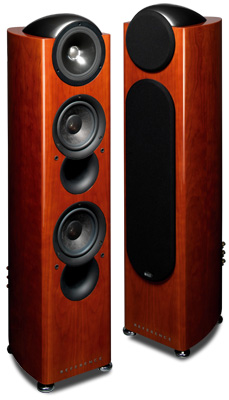
I was watching an episode of The Gadget Show where they compared high-end speakers with incredibly expensive speakers. The end result was pretty even, even though the expensive speakers were more than 30 times the price of the reasonably priced ones. So the question is, exactly how much do you need to spend to get the quality you're looking for?

What I usually do is compare the price with the relative quality of what you're buying, so step one is to find something solid and statistical that you can compare. In the case of cars look at reliability, fuel consumption, get the opinion of other people who own the cars in question on the styling and maintenance. (Don't believe the brochures. They don't lie, but they spin the truth) For something like speakers, look at impudence, response range, volume and sound-to-noise levels. For computer parts such as 3D graphics cards, find a reputable website and get benchmarks. Next, find out what each item in your list will cost. Remember to include setup fees or maintenance plans.

Now set up a little spreadsheet or something and pull a graph. This is the trick part. You'll see that from low-end to mid-range the price will rise slowly but the quality increases dramatically. This is because manufacturers need to make the initial buy-in to produce the item. With cars you don't really have a car unless you've put wheels on it, welded the thing together, gotten it tested, etc. You will then notice at a certain point it levels out, where the price increases steadily as the quality goes up. Then suddenly you'll hit a wall where it becomes very expensive for relatively little gain. This is the cut between mid-range and high-end. When you're looking at cars (once again) the price difference between the normal model and the sport model is often quite a bit, but the performance gain isn't all that major especially if you'll only be commuting with it.

Once you've gotten this graph figured out, you'll have a mental idea of what you're paying for in each iteration. You can then make an educated decision as to what you can afford and if you're getting your money's worth.

I need to mention two things here. Firstly, people tend to decide on a budget and strictly stick to it. I think this is the wrong approach. Many times once I've made up my graph I see that I've either grossly under-budgeted (not realising what things cost) or there's an item just a little more expensive with a quite considerable improvement. Be willing to shift your budget, otherwise you end up buying inferior goods because you're stingy. If you can't afford it right now, but you can wait a month or two and save up, do so. You'll be much happier with your purchase once you make it. Secondly, consider what you're buying for. If you're buying small speakers so you can hear your computer go ding when something happens, you don't need surround sound or a subwoofer. If you're buying speakers for a home entertainment system it's a good idea to look at slightly more expensive speakers, but maybe a better idea to stick to smaller speakers that don't fill your living room.

I find that buying just below the mid-to-high-end cut-off delivers the best results, where products work well but aren't flashy or over the top. On my computer games run reasonably well and I didn't shovel out a fortune for it.

Oh, one last thing. If you're planning on buying something quite expensive like computer parts, something that's in a quickly evolving market, take a look at upcoming products. What you're planning to buy might soon be replaced by a newer model in the same price range with better features. In this case you can either buy the newer model, or you can wait for the shops to drop the price of the current model in order to get rid of it and stock the new. A win-win situation.

Having taken all this into account, I suggest you step back, take a breath, maybe have a cup of something soothing, then buy what feels right. Your subconscious often picks up on little things that you're not thinking of. One of the products might feel cheap in your hands but there's really nothing wrong with it. It's a good buy, but you'll always feel cheated.

One last thing to consider. This item that you're planning to buy... do you actually need it? Or do you just want it? But that's a topic for another day...


Words:
"If ignorance is bliss, why aren't there more happy people in the world?"
-Stephen Fry on QI (Quite Interesting)


Monday, 11 August 2008

Organic Computing

Anyone who's seen sunlight in the last 20 years knows that computers work in binary. Ones and zero's. On or off. There's no inbetween. It's structured, organised and predictable. It allows people like me to control a user's experience, anticipate their behaviour, and provide them with what they need. But why is this? Humans have a natural urge to organise. To put concepts into categories. To decide what is relevant and what can be ignored. But why is this? Because when we were barbarians (no offence to barbarians, they did a lot for our species) knowing what to pay attention to meant the difference between life and death.

Personally I don't make decisions until I know something about all the options presented to me. When there are only 2 options, the decision is easy. You can then begin assigning theoretical meanings to each value. "When this link changes colour, it means I've been to this page." The information that is given to you is simple, but you're willing to be more loosely coupled about the concept when it's in your mind, because then you're in control. As long as it's in the computer, the values of on or off means that electricity is flowing or it is not flowing, like a complex network of electric extention leads all plugged into each other, back and forth. Depending which lights you want on, you walk around flipping different switches. After a while you get bored and you start doing strange things such as synchronising Christmas lights to music.

This is the core of all electronics: Flipping switches really fast to make it do what you want.

The truth is, nothing is coldly logical. A computer may present itself in ones and zero's, but when you drill all the way down, those digits are stored somewhere on a disc. On that disc there's some physical medium being forced into a positive or negative state. The medium may well be able to store more values, such as half-on or almost off. But if it did, it would be much more complicated to control.

But now we've become used to the basic functionality of computers. (I use the term "basic" loosely) Now we want a computer that can think and deduce like a person. We want a computer in our fridge that will order milk over the internet when you're running low. We want a door that unlocks when you ask it to. We want computer-controlled players in games that can play against us as if we're playing against a friend, making mistakes like a human player would. So we programmers end up trying to get ones and zero's to seem like they're thinking. To appear to have several options such as half-on or almost off. We end up taking the analogous medium, forcing it into a controllable digital medium, only to create a pretend analogous experience.

In my opinion, the only way we can create machines that can think, is to leave the electronic and robotic environment behind and work with something pure, something natural. Something that works like a brain. As long as we're stuck behind coldly logical situations, we have to think of every possible scenario and prepare for it. We can never just leave the thing to learn. A computer, no matter how advanced, can never truly be spontaneous. The problem is, creatures have spent millions or years making mistakes, only the lucky few surviving, to develop the natural ability to learn. Even a child of a few weeks old can learn from their own experience (with a little help).

As far as I know the closest we've ever come to a human-created thing teaching itself is Lucy the Android (pictured).

There isn't really a point to this. I'm just putting out there something that was mulling around in my head the last few days... It's all very interesting once you start reading up on it a bit. Comments welcome, especially if it's philosophical...


Words:
"Anyway what went wrong with A. I.? Well its all this guy’s fault and I presume most of you recognise Alan Turing. He was probably the one person qualified to expect that by now nobody would be making me stand up here and talk about how we were going to achieve human like intelligence because we would have done it. Because 52 years ago, he made this prediction 'By the end of the century one would be able to speak of machines thinking without expecting to be contradicted'. Well the end of the century came and went a couple of years ago and coincidentally the time ran out for Turing's prediction the exact second when computers were destined to tell us how stupid they were on account of the fact that they couldn't add up the date properly. So it all went horribly wrong and around the turn of the century I started thinking about why it went wrong. I considered it carefully and came up with the following considered opinion "its because we A. I. researchers are all narrow minded, domineering, chess playing computer nerds'."
-Transcript of Steve's keynote speech, "Machines Like Us," given at the Applied Knowledge Research Institute's 2002 Biennial Seminar


Thursday, 24 July 2008

Survival of the Smartest

If you spend a little time observing a pack of wolves, you quickly notice a hierarchy. There's an alpha male, considered the leader, and his followers. The followers all want to be the alpha, but unless they can challenge and defeat the alpha, they're forced to follow him. The females in the group would want to be with the alpha because he is the strongest or fastest of the males, and thus holds genes that would guarantee their offspring's future.

Humans were very much the same for a long time. The jock was the guy with the girls. He was the popular guy until someone appeared to be better than him, at which point he was replaced. Later this was shifted towards money. The richest guy was considered the popular one. He could make things happen. But recently, this balance of Survival of the fittest has shifted.

I read somewhere once that woman find Dilbert(pictured) attractive. Why is this? By all standards he's the lesser man. He's unhealthy and ugly. It's because he's a geek.

On a subconscious level, people realise that with the advent of the internet as a business and social tool, and a massive part of everyday life, the people who are involved in this sector are the ones with the reliable income in the foreseeable future. On the other side of the spectrum is the current sports star. Though they make millions in a very small time frame, their earning ability is directly linked to their health. And in this world of fast food and couch entertainment it becomes increasingly difficult to stay at the top of your game. It's no longer the survival of the fittest, it's survival of the smartest.

But don't think it's easy to stay at the top in the IT sector. The problem with a web-driven life is that it becomes susceptible to trend. Today people will love your product. Tomorrow they could be enthralled in someone else's product. Or worse, you could get sued for some repercussion that your product has in the real world, like what happened to Napster.

To stay on top in this environment, you need to stay up to date. And by date, I mean literally to the day. You need to know what's hot on the net, and what's the next big thing. This creates the problem that you might fall for a trend that lasts only a week. You could become a cloner...

Definition of word I just made up:

Cloner (noun)
A product or company that copies a successful idea almost to the letter, differing only enough to be distinct, but not enough to discredit the popularity.
On the other hand, cloners can often hit on an idea that makes their idea better than the original. You don't always get it right the first time. Take for instance MySpace. It allowed you to tell other people about you (and later about your band, company or whatever). You had a list of friends, but that's basically as far as you could take it. Then Facebook came along. In essence it was the same concept, but it was focussed on your real identity and your real friends. Not just that, but it shows you your mutual friends to help you figure out how you know someone. Later it also started showing you who you might know on Facebook that you didn't realise was on Facebook, by tracking who's friends are also your friends.

This simple link between the internet and everyday life made Facebook much more popular than MySpace. Not to mention more sophisticated. When you go to someone's MySpace page, you're bombarded by animations, video's, music, flashing banners, games... basically anything that you feel like putting on there. It's messy and noisy. Facebook has a rule: No active content on your profile unless the viewer activates it. It's much cleaner. They're also working on separating your profile into different areas, your critical information being the first thing you see. The rest of your content will be shifted to another page, so a viewer only has to see it if they're interested in it. (do I get my commission now?)

The internet and its relating technologies is where the sustainable income of the future will be. And if you're careful, you might be one of the lucky few to end up on top.


Words:
"First, I sit up. Writing is serious business for which your spine must be straight. I also lean my head slightly downward, looking up at my words as I write. Occasionally I mumble what I'm typing… no clue why."

-Rands in Repose