Showing posts with label affordability. Show all posts

Sunday, 8 February 2009

Docs...

When I say I'm heavy on my shoes, I mean it. I get up in the morning, shower, dress, put on my shoes, and that's where they stay till I get into bed at night. The shoes I wear must go where I go, do what I do. If I want to walk 20 km up Buitengracht street, they take me there. If I want to break into a sprint across a wet field my shoes have to get me to the other side. If I want to stand my ground in a mosh pit I need something to keep me rooted to the floor.

I buy one pair of shoes and wear them until they fall apart. I don't want to waste time deciding which shoes to wear today. Foot goes in, tug on laces, maybe a knot, and off I go into the urban jungle.

On average my shoes last two or three months before they give up. It needs to be strong, comfortable and especially affordable. They will break. I will need to replace them. I can't afford the most expensive shoes every time. I've also figured out that shoes with ankle support is a better idea for me, so that's a requirement aswell.

I tried Converse All Star Hi-tops for a while. Though they are comfortable shoes they don't last very long and get dirty unbelievably quickly. Caterpillar shoes are strong but just don't fit the shape of my feet (slim at the heal, wide at the toes. Fighter's feet, I'm told...) Then one day I decided to try a pair of Doc Martens.

I bought the 8-up laced design. It had the ankle support I needed without being too complicated to lace up every time. I was told to buy them tight. Because it's made of leather they will stretch to fit my feet. The first two days I wore them around the house in the evenings but couldn't bring myself to give up the biker boots I was practically living in at the time.

After two weeks the leather had settled. These were officially the most comfortable shoes I had ever owned. As my foot slipped in it felt like one hand grasping the other. It was like a hug from a loved one, it fit that good. These shoes did literally everything I needed them to. The soles were flexible without being soft. They were a soft walk but I could still feel the road under my feet. The shoes are narrow enough to fit between the car's peddles (manual gearbox thank you) but wide enough to keep my balance when sprinting through crowds on a busy street.

These shoes are cool when it's hot. They keep my feet warm when it's cold. There's no pair of shoes I would rather wear.

I sit typing this with, you guessed it, those same docs on my feet. I forget exactly when I bought them but I'm sure it's been over a year now. The leather looks a bit tarnished but nothing a coat of leather food won't fix. The soles are still solidly part of the shoe thanks to this bright yellow stitching. There's a few indications of the underside thinning but nothing to cause worry.

I understand why these shoes have become such a staple of durability. It's obvious why they've become so famous in 50 years. Very few products are so famous that they make the brand. Moleskine. Converse. Ford. Boeing. Dr Martens.

"The boots and shoes have been especially popular among skinheads, punks, grungers and members of a few other youth subcultures."
-Wikipedia

So why are these shoes so popular in the frowned-upon part of society? I have no idea. We were at a gig last night(pirate party, Strident played) and I can distinctly remember twenty (yes 20) people wearing classic black docs in varying heights. And if you ask any of them, they will never buy another pair of shoes. If those broke, they'd replace them with the same.

It's inexplicable. Docs have become a part of the culture. It's an item of recognition. "So where did you buy your docs?" is a perfectly valid pickup line.

I think the answer is relatively simple: It's a really good, inexpensive, easy to care for pair of shoes. They are so simple, there's nothing that can go wrong with them.

As with any niche-market product, it has become increasingly difficult to find docs in South Africa. I fear the day these finally give out on me. Maybe I should try going barefoot for a while...


Words:
"There is no shortage of guys picking up guitars and trying to get chicks."
-Gamers with Jobs Conference Call Ep 121


Sunday, 11 January 2009

Puzzles

When last did you build a jigsaw puzzle?

Can you even remember? It's something our parents did. Or not even. Maybe you remember visiting your grandmother's house and there was an uncompleted puzzle on the dining table. But why don't we see puzzles anymore?

Because kids play computer games and consoles, that's why. You even get jigsaw puzzle games! I've said many times that I am a gamer. I'm not ashamed of it. But I know you can't spend your entire life behind a monitor. Use your hands for once!

Puzzle building has some very important skills to teach, the most obvious ofwhich is pattern recognition and being able to notice a part of something even when presented seperate from the whole. It also improves hand-eye coordination, dexterity and visual memory.

Then there are secondary skills you learn, like planning:
If you're searching for a specific piece but can't find it, maybe you should try building around that piece and getting some more imformation on its shape, or leave it for the time being and try somewhere else. Sometimes you can gather all the pieces that "look like sky" to narrow down your search. That's problem-solving right there!

It also destresses because you can calmly sit and scan the pieces for the one you're looking for. And it's addictive. When you keep finding a piece every few minutes, whole afternoons can fly by. Every time you find a piece it feels like you're getting somewhere and you only need a few more.

Not to mention the amazing artwork. This picture is the puzzle we just finished. When you first look at it you think "but it's all the same colour!". It's not. The clouds in the sky are smooth, the sea is rough. The ghost ship is a very distinct white. Even the lace on her dress allows you to find similar pieces.

I bought my mom a world globe puzzle a year back. Yes, the puzzle is three-dimensional. I've also seen some interesting games made from puzzles. My aunt has a puzzle that doesn't have a picture on the box. It's a murder mystery. You read the little story of how the people came to be in the house, heard the gunshot and found the body. Then the puzzle is the crime scene and as you build you discover the killer's identity.

Jigsaw puzzles are extremely underrated as a pastime. I think everyone should have at least one puzzle in their house at all times, even if you never build it, your children or friends might. And as soon as they do you'll be hooked. Puzzles are cheap in comparison to other games, and will keep you entertained for much longer than a stupid DVD...


Words:
“There are no extra pieces in the universe. Everyone is here because he or she has a place to fill, and every piece must fit itself into the big jigsaw puzzle.”

Sunday, 31 August 2008

Wants and Needs...

When I posted about making good purchases 2 weeks ago, I touched on the point that you don't always need to buy what you're considering. Time to explain.

Let's begin with a question: How much stuff do you have lying around the house that you never used, but thought it essential for whatever you're planning? What made you buy it? A television advert? Probably. Maybe you deduced that all this stuff is needed because they always have all this stuff in the movies. You're falling into exactly the trap the marketers want.

Companies want to sell their gear. Gear that is functionally identical to the next company's product. And who will be the softest victim? A layman. "Trust me, you're going to need this." This is usually a lie. Most hobbies or sporting activities can be gotten into without expensive equipment. And if special equipment is needed, such as climbing gear, ice skates, ten pin bowling shoes and balls, there is most likely a company or venue that lets you rent it for a few hours. It makes business sense. They want more people involved so they make the expense of starting out as little as possible.

When it comes to confusing the general public into buying stuff geeks are the biggest offenders. When you walk into a computer store you're bombarded by reasons why your computer isn't good enough and what you can buy to make it better. The truth is most of it does nothing special and you would only notice the difference when you're a semi-professional. You don't need a laser gaming mouse with a specially designed mouse pad and a gazillion buttons if you're only going to play Bejewelled with it. You don't need the fastest graphics card on earth if you just want to play the occasional game. Granted, it won't run as fast or as prettily as the top-of-the-range machines, but with casual games you won't even see a difference.

I have a bad habit. When I discover a new hobby I get into it head-long. I buy everything I could possibly need thinking that this hobby will be my time-filler for the next few years. The remote control car(above) is a perfect example. Buying the car, its controller, batteries and charger, the paint and assembling it wasn't good enough. I had to buy all the modifications needed to make the car competitive on the track. I knew there was an amateur division but I didn't care. I wanted it all! A few weeks of going to the track to practice and subsequently being chased off by professionals, and the novelty had worn off. The car now does what most RC cars do: Race around small traffic cones in the driveway.

So what I do now is ask around. Find out if any of my friends have tried it and if they have the equipment for me to borrow, or know where I can rent it for a few days. Many times my friends say I don't even need all that stuff. Just get the cheapest {name item here} and you'll do fine. The rest can come later.

Most product ranges also have an amateur item in its range. For instance, in the digital photography (I still think that's an oxymoron) industry Canon has the Rebel XT, which costs less than some compact digital cameras and provides all the features needed by even professionals, the main disadvantage being the rate and number of photos that can be taken in succession in a single go. I think 8 megapixel is more than enough for a good photo.

So the moral of the story is as follows: If there's something you want to try but you think it will be expensive, ask around first. See if you can rent what you need, or buy second hand, or borrow from a friend. And most of all, do you even need it all?


Words:
"Do you suck at saying "u suck"? A gentleman is always three things:
1) Original
2) Grammatically correct and
3) A gentleman
Call foes something a bit unusual. They'll be thrown if they get it and revealed as an idiot in front of their peers if they don't."
-PC Gamer, April 2007 regarding DefCon


Sunday, 17 August 2008

The Price of Quality

My mom always says you shouldn't buy cheap because it'll break, and buying twenty cheap frying pans (or whatever) is more expensive than buying a single, expensive one. But how true is this?

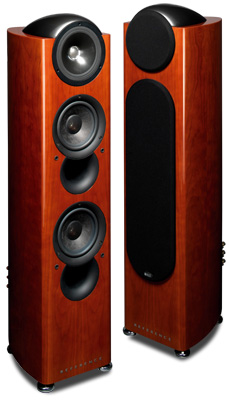
I was watching an episode of The Gadget Show where they compared high-end speakers with incredibly expensive speakers. The end result was pretty even, even though the expensive speakers were more than 30 times the price of the reasonably priced ones. So the question is, exactly how much do you need to spend to get the quality you're looking for?

What I usually do is compare the price with the relative quality of what you're buying, so step one is to find something solid and statistical that you can compare. In the case of cars look at reliability, fuel consumption, get the opinion of other people who own the cars in question on the styling and maintenance. (Don't believe the brochures. They don't lie, but they spin the truth) For something like speakers, look at impudence, response range, volume and sound-to-noise levels. For computer parts such as 3D graphics cards, find a reputable website and get benchmarks. Next, find out what each item in your list will cost. Remember to include setup fees or maintenance plans.

Now set up a little spreadsheet or something and pull a graph. This is the trick part. You'll see that from low-end to mid-range the price will rise slowly but the quality increases dramatically. This is because manufacturers need to make the initial buy-in to produce the item. With cars you don't really have a car unless you've put wheels on it, welded the thing together, gotten it tested, etc. You will then notice at a certain point it levels out, where the price increases steadily as the quality goes up. Then suddenly you'll hit a wall where it becomes very expensive for relatively little gain. This is the cut between mid-range and high-end. When you're looking at cars (once again) the price difference between the normal model and the sport model is often quite a bit, but the performance gain isn't all that major especially if you'll only be commuting with it.

Once you've gotten this graph figured out, you'll have a mental idea of what you're paying for in each iteration. You can then make an educated decision as to what you can afford and if you're getting your money's worth.

I need to mention two things here. Firstly, people tend to decide on a budget and strictly stick to it. I think this is the wrong approach. Many times once I've made up my graph I see that I've either grossly under-budgeted (not realising what things cost) or there's an item just a little more expensive with a quite considerable improvement. Be willing to shift your budget, otherwise you end up buying inferior goods because you're stingy. If you can't afford it right now, but you can wait a month or two and save up, do so. You'll be much happier with your purchase once you make it. Secondly, consider what you're buying for. If you're buying small speakers so you can hear your computer go ding when something happens, you don't need surround sound or a subwoofer. If you're buying speakers for a home entertainment system it's a good idea to look at slightly more expensive speakers, but maybe a better idea to stick to smaller speakers that don't fill your living room.

I find that buying just below the mid-to-high-end cut-off delivers the best results, where products work well but aren't flashy or over the top. On my computer games run reasonably well and I didn't shovel out a fortune for it.

Oh, one last thing. If you're planning on buying something quite expensive like computer parts, something that's in a quickly evolving market, take a look at upcoming products. What you're planning to buy might soon be replaced by a newer model in the same price range with better features. In this case you can either buy the newer model, or you can wait for the shops to drop the price of the current model in order to get rid of it and stock the new. A win-win situation.

Having taken all this into account, I suggest you step back, take a breath, maybe have a cup of something soothing, then buy what feels right. Your subconscious often picks up on little things that you're not thinking of. One of the products might feel cheap in your hands but there's really nothing wrong with it. It's a good buy, but you'll always feel cheated.

One last thing to consider. This item that you're planning to buy... do you actually need it? Or do you just want it? But that's a topic for another day...


Words:
"If ignorance is bliss, why aren't there more happy people in the world?"
-Stephen Fry on QI (Quite Interesting)