Showing posts with label self-improvement. Show all posts

Tuesday, 28 July 2009

Musicality And Everyday Life

I don't know a single person that doesn't listen to music in some form, whether it's the iPod in your pocket, on the radio or going to clubs. But music has benefits other than providing a backtrack to your daily life.

I'm a musician. I live for my music and I've noticed over the last few months that a sense of musicality helps you in an everyday capacity. You learn rhythm, timing, pitch... You even learn to listen.

Let's start with the basics. If you play an instrument you learn rhythm. This is an invaluable skill when you learn to dance, but is also handy in things like modelling, where you want even, smooth steps. You also learn to predict things more accurately. "1, 2, 3!" If counted at regular intervals, everyone knows when 3 is going to land because the gap between 1 and 2 is the same as 2 and 3.

Timing. The first example I can think of is knowing how long it'll take for a traffic light to change. It's an internal sense of how long things take to happen. It prevents you from jumping the gun, running a red light that changes moments later. It even helps comedians to pause for the exact length of time for comedic effect.

Pitch. If you can play an instrument you can tell when something changes pitch. Did you know that a flat tyre makes a lower sound than a properly inflated tyre? A glass or mug with a chip also produces a different sound.

And this brings me to my last point. You learn to listen. When you study music, they often let you listen to a song and pick out specific instruments or sounds. This skill is handy in all kinds of ways. I've been able to work out what's wrong with my car simply from the sounds it makes. Speaking of cars, I've saved myself from getting run over twice because I heard a car approaching behind me, even through the noise of other cars.

When I was younger, watching TV, I would often turn off the sound and listen for the sounds my mom were making in the house, then guess what she was doing. It was a fun game, but it taught me of the little sounds everyday objects make.

Computers also make sounds. When I sit in bed with my laptop, I sometimes position it in a way that cuts off the airflow into the machine, but withing a few seconds I would notice the hum kick in of the internal fan trying to keep the thing cool, and I know it's suffocating. You can hear the hard drive in a computer churning when it's copying things. When you think the machine has frozen you tend to panic and start pressing buttons. "But wait, the hard drive is still churning. Maybe it's just busy." And invariably it wakes back up when it's done with whatever it was doing.

Besides being a backtrack to your life, music is a skillset. I use my musicality on a daily basis and I'm very thankful to my parents for affording me every opportunity available to develop it.


Words:
"Seriously, we should give up on the idea of anything mainstream because pop culture has splintered into a thousand things and will never be put back together."
-Robert Ashley, guest on Gamers with Jobs Conference Call Ep 126


Sunday, 1 March 2009

Smell

How often do you use your nose? Whatever your answer, it's not enough. The world is full of smells. Good and bad smells. Smell can tell you something about your environment that you could never see with your eyes. And my favourite part of using my nose is the memories.

I read once that smell is the sense that connects easiest with memories. For example:
The other day I passed a colleague in the hall and had a sudden flashback of my first job after college. The reason for this was her perfume, the same as that first boss' wife.

When I walk into the men's room at work I'm always reminded of being drunk. Not any specific instance (there aren't very many), just the overall feeling of having had too much to drink. I always go to the bathroom to drink water when I've had too much alcohol, so my brain made a link.

One of my best friends works for Aromatic Apothecary, among other things. Many evenings we all get together for coffee and the entire room would be filled with a complex mixture of incense and oils emanating from her clothes. It makes for quite an olfactory adventure.

Restaurants always carry the most amazing smells. You become hungry simply walking into the place.

And of course nature. Walking between the car and the shop sometime last week, I picked up on a most amazing scent. I mentioned it, and was shown a pine tree growing across the road in a field. That's it. A single tree. It was lovely.

Often I can smell the rain coming. There's a pressure in the atmosphere but my nose screams of fresh water. A storm is coming.

For the last two weeks everything smells of burning wood. It's not a nice smell. It's a warning. Animals tend look around, work out the direction of the threat, and move to somewhere safe. Even my two rats stand up in their cage when there's a fire coming.

I've completely lost the plot that this article almost never had. It's more a musing than a train of thought. I hope it makes you use your nose a bit more...

Sunday, 8 February 2009

Docs...

When I say I'm heavy on my shoes, I mean it. I get up in the morning, shower, dress, put on my shoes, and that's where they stay till I get into bed at night. The shoes I wear must go where I go, do what I do. If I want to walk 20 km up Buitengracht street, they take me there. If I want to break into a sprint across a wet field my shoes have to get me to the other side. If I want to stand my ground in a mosh pit I need something to keep me rooted to the floor.

I buy one pair of shoes and wear them until they fall apart. I don't want to waste time deciding which shoes to wear today. Foot goes in, tug on laces, maybe a knot, and off I go into the urban jungle.

On average my shoes last two or three months before they give up. It needs to be strong, comfortable and especially affordable. They will break. I will need to replace them. I can't afford the most expensive shoes every time. I've also figured out that shoes with ankle support is a better idea for me, so that's a requirement aswell.

I tried Converse All Star Hi-tops for a while. Though they are comfortable shoes they don't last very long and get dirty unbelievably quickly. Caterpillar shoes are strong but just don't fit the shape of my feet (slim at the heal, wide at the toes. Fighter's feet, I'm told...) Then one day I decided to try a pair of Doc Martens.

I bought the 8-up laced design. It had the ankle support I needed without being too complicated to lace up every time. I was told to buy them tight. Because it's made of leather they will stretch to fit my feet. The first two days I wore them around the house in the evenings but couldn't bring myself to give up the biker boots I was practically living in at the time.

After two weeks the leather had settled. These were officially the most comfortable shoes I had ever owned. As my foot slipped in it felt like one hand grasping the other. It was like a hug from a loved one, it fit that good. These shoes did literally everything I needed them to. The soles were flexible without being soft. They were a soft walk but I could still feel the road under my feet. The shoes are narrow enough to fit between the car's peddles (manual gearbox thank you) but wide enough to keep my balance when sprinting through crowds on a busy street.

These shoes are cool when it's hot. They keep my feet warm when it's cold. There's no pair of shoes I would rather wear.

I sit typing this with, you guessed it, those same docs on my feet. I forget exactly when I bought them but I'm sure it's been over a year now. The leather looks a bit tarnished but nothing a coat of leather food won't fix. The soles are still solidly part of the shoe thanks to this bright yellow stitching. There's a few indications of the underside thinning but nothing to cause worry.

I understand why these shoes have become such a staple of durability. It's obvious why they've become so famous in 50 years. Very few products are so famous that they make the brand. Moleskine. Converse. Ford. Boeing. Dr Martens.

"The boots and shoes have been especially popular among skinheads, punks, grungers and members of a few other youth subcultures."
-Wikipedia

So why are these shoes so popular in the frowned-upon part of society? I have no idea. We were at a gig last night(pirate party, Strident played) and I can distinctly remember twenty (yes 20) people wearing classic black docs in varying heights. And if you ask any of them, they will never buy another pair of shoes. If those broke, they'd replace them with the same.

It's inexplicable. Docs have become a part of the culture. It's an item of recognition. "So where did you buy your docs?" is a perfectly valid pickup line.

I think the answer is relatively simple: It's a really good, inexpensive, easy to care for pair of shoes. They are so simple, there's nothing that can go wrong with them.

As with any niche-market product, it has become increasingly difficult to find docs in South Africa. I fear the day these finally give out on me. Maybe I should try going barefoot for a while...


Words:
"There is no shortage of guys picking up guitars and trying to get chicks."
-Gamers with Jobs Conference Call Ep 121


Sunday, 11 January 2009

Puzzles

When last did you build a jigsaw puzzle?

Can you even remember? It's something our parents did. Or not even. Maybe you remember visiting your grandmother's house and there was an uncompleted puzzle on the dining table. But why don't we see puzzles anymore?

Because kids play computer games and consoles, that's why. You even get jigsaw puzzle games! I've said many times that I am a gamer. I'm not ashamed of it. But I know you can't spend your entire life behind a monitor. Use your hands for once!

Puzzle building has some very important skills to teach, the most obvious ofwhich is pattern recognition and being able to notice a part of something even when presented seperate from the whole. It also improves hand-eye coordination, dexterity and visual memory.

Then there are secondary skills you learn, like planning:
If you're searching for a specific piece but can't find it, maybe you should try building around that piece and getting some more imformation on its shape, or leave it for the time being and try somewhere else. Sometimes you can gather all the pieces that "look like sky" to narrow down your search. That's problem-solving right there!

It also destresses because you can calmly sit and scan the pieces for the one you're looking for. And it's addictive. When you keep finding a piece every few minutes, whole afternoons can fly by. Every time you find a piece it feels like you're getting somewhere and you only need a few more.

Not to mention the amazing artwork. This picture is the puzzle we just finished. When you first look at it you think "but it's all the same colour!". It's not. The clouds in the sky are smooth, the sea is rough. The ghost ship is a very distinct white. Even the lace on her dress allows you to find similar pieces.

I bought my mom a world globe puzzle a year back. Yes, the puzzle is three-dimensional. I've also seen some interesting games made from puzzles. My aunt has a puzzle that doesn't have a picture on the box. It's a murder mystery. You read the little story of how the people came to be in the house, heard the gunshot and found the body. Then the puzzle is the crime scene and as you build you discover the killer's identity.

Jigsaw puzzles are extremely underrated as a pastime. I think everyone should have at least one puzzle in their house at all times, even if you never build it, your children or friends might. And as soon as they do you'll be hooked. Puzzles are cheap in comparison to other games, and will keep you entertained for much longer than a stupid DVD...


Words:
“There are no extra pieces in the universe. Everyone is here because he or she has a place to fill, and every piece must fit itself into the big jigsaw puzzle.”

Sunday, 9 November 2008

Isolation

Five years ago when I had just gotten my driver's license, I used to get annoyed at my mom. She would pester me with reminders such as looking for emergency phones when driving far, and keeping track of petrol stations and truck stops even if I don't stop at them. I found it very irritating. But if something were to happen to me out on the road, that was the one thing that could save me. Because five years ago, I didn't have a cellphone.

I didn't have a phone because if I needed to speak with someone, I went there and found them. If I wanted to buy something, I went to a shop where I spoke to a person. If something happened to me out on the road, I walked to the nearest truck stop or emergency phone.

These days everything is virtual. If I read (on the internet) about a game that I think I'd enjoy, I go to Take2 (on the internet) and order it. It then gets delivered to my house a few days later. You can buy literally anything online these days, even groceries. I even rent DVDs online. When you're out on the road, you drive with all your windows shut tight so the aircon can do its thing. You look out at the world like it's a movie, or some display in an aquarium. You don't interact with the outside world or with other people. It's your little adventure.

You don't go to someone's house, you hook up online. As I say this, I consider running Google Talk and checking who's at home.

I work for a company that sells services. Internet connectivity, websites, bulk e-mail, etc. Beside the fact that we don't have physical stock to put on a shelf, we don't need a shop front because no-one would ever come. People order services on our website. They pay for it with a credit card. If something goes wrong they e-mail us. If it really goes wrong they phone our support people.

It's sad, really. We all go on about going green and being environmentally friendly, but we isolate ourselves from the outside world. Not just from nature (heaven forbid a single bug should make it past the windowsill) but also from each other.

I think we prefer it that way because we don't have to deal with uncertainties. Facial expressions, body language and tone of voice are gray areas, open to be misinterpreted. If it's there in writing in my inbox, how can I get it wrong? For a perfect example of doing things online instead of going out and living it up, read the quote below. (Sorry Jeff, I love your posts but you're a geek)

Do yourself a favour. Next time you want to buy something, instead of just going online and ordering it, go into a shop and buy it. Walk in, find yourself a nice friendly store clerk that knows what they're doing, and communicate.


Words:
"I don't actually know a whole lot about animals now. Except that I like them. So now I'm giving myself a crash course in all sorts of things--which is also giving me a side course in geography (hey--Africa is a continent!)--through extensive reading, Wiki-ing, and watching of channels like Animal Planet, when they're not doing one of their 35 shows on dogs."
-Jeff Green


Sunday, 19 October 2008

Not Smart But Social

My friend Paul linked me to this article. It explains being able to conduct yourself socially is more of an advantage than being smart or well-read. And through personal observation, I tend to agree.

As a programmer, I come into contact with some very smart people. People who don't always have the best manners or quite know how to express themselves, because they spend all their time behind a computer, learning. Now when it comes to a corporate environment, your work doesn't always speak of your skills. Many times you need to convince the higher-ups that your idea is worth their time before they even see the first line of code. It's because of this that some of the greatest programmers out there end up in the lower jobs of a company. Their work is epic, it almost never breaks and when it does it takes only a quick glance to find and correct the problem, but because they can't communicate with others they will never get that managerial job. They can never teach others to do what they do. And this is a serious problem. Being in the right field of work may guarantee you a job in the future, but will it really be the job that you're capable of performing?

I'm not the smartest kid on the block by far. I need something explained to me in quite ferocious detail before I understand it. But once I understand it, I have no problem in explaining it to others in a way that they can understand. And that's what I think will drive my career in the future. My work is sufficient, but often not perfect. I overlook things. My code needs a revisit or two before it can go live. But if someone asks me how I did it or why I did it that way, I can easily explain it to them. When I need someone from another department to do something for me, I know how to ask that they know what it is I need, and that gets the job done just that little bit faster.

The ability to explain also flows onto e-mails and written communications, where the lack of expression is a problem. Just because you know what you're saying doesn't mean the recipient will. Is all the information there that they need? Rather too much information than too little.

So here's my lesson to everyone: Talk to yourself. Not necessarily out loud, in your head. It'll not only help you wrap your head around what you're doing (explaining something forces you to simplify) it'll also make it easier to communicate with others what you're doing, what you need them to do, or what they did wrong.

I always used to complain to others that my head of development mumbled to himself the whole time. Now maybe I'll start doing it...


Words:
"I made a firm decision starting out that I wasn't going to have anything to do with any of those player-run corporations that game boasts. I've seen their recruitment threads on gaming forums and I'm frightened that interacting with such people to any great degree will infect me with some wierd desease that causes flowcharts."
-Zero Punctuation, EVE Online


Monday, 13 October 2008

The Internet Is Not Real

When we negotiate our way around the internet, we come into contact with many pages and many people. They have no idea who it is that's viewing, and it doesn't really matter. So when you start interacting with others you don't really pay attention to what you're doing or saying, because it doesn't relate back to you in any way. When you comment on a blog like this one, the people on the other side see only your username and maybe a profile connected to it, with no information that comes back to you. Nothing stops you from simply never returning to that account.

You also communicate with the people you know in real life. Many of them you haven't seen in a while, or you may never see them. But you can make or break relationships through your actions. What you say on Facebook carries weight. If you're racist on the internet, it hurts people's feelings. It's fine if you air your opinions in a rational way and have an adult discussion about it, but lashing out at a specific demographic serves no purpose besides emotional injury and aggravation. Besides, I don't see how any mature, rational person can be racist. It's a counter-statement.

Your subconscious tells you the internet is something non-existent. It's just a cloud in the sky. So you don't think twice about speaking your mind. I've heard people say: "I didn't mean it that way! Come on! It's an e-mail for goodness sake. Don't take it so seriously."
That's the wrong approach, but sadly it's how people think.

We need to realise that the person on the other end is an actual human being, with feelings and opinions. Even if you've never met them, and never will, your words could impact their life. Just because it's the internet, doesn't mean it doesn't communicate.


Sorry for the depressing post. I'll be up to my usual ponderings next week.


Words:
"When the internet gets angry, it's an infinite source of amusement."
-Evil Avatar Radio, now In-Game Chat


Sunday, 5 October 2008

Like Chess But Different


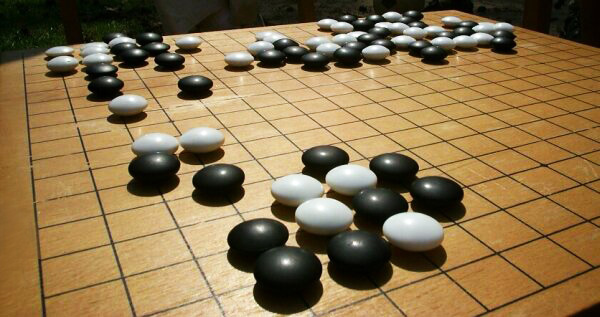
Go is a strategic board game for two players. It differs from chess by only having one type of playing piece. What it shares with chess is an infinite complexity.

For me, and many others, it all started with an animé: Hikaru no Go. The series follows a young boy through the trials and tribulations of playing Go, making it through school, trying to start a Go club and playing in tournaments. Not only was it a really well-executed animé, it also managed to make a relatively mundane board game appear epic. According to Wikipedia:
The manga is largely responsible for popularizing Go among the youth of Japan since its debut, and in other areas such as mainland China, Hong Kong, Taiwan, and South Korea. More recently it has gained much popularity in the United States.
So after watching the animé, I did a little reading and shopped around for a goban, but couldn't find any at nearly a reasonable price. The only place I could find was online, and that was too expensive. So I made my own. A nice wide plank of pine, a ruler and a carver's V-tool took me half an hour to make it. Then a little inking to make the lines sharper and a coat of varnish. I then bought two bags of glass stones, a bag clear and a bag blue. And there you have it, the poor-man's goban.

I consulted my encyclopedia of games (one of the most important books on my bookcase) and off we went. The animé also had a 5-minute lesson at the end of each episode, which helped a lot with the basics. My friends and I now play regular games. The game is quick to pick up, but it can take years to even realise the depth of the game.

If you have a chance, I would encourage anyone and everyone to watch a few episodes of the animé, or read the manga (can be read online at onemanga.com). Then you can try your hand at the game, through the Internet Go Server (a.k.a. PandaNet).


Words:
"When did this square become a meeting place for go players? I don't know. After so many thousands of games, the chequerboards engraved on the granite tables have turned into faces, thoughts, prayers."
- The Girl Who Played Go, Shan Sa


Sunday, 31 August 2008

Wants and Needs...

When I posted about making good purchases 2 weeks ago, I touched on the point that you don't always need to buy what you're considering. Time to explain.

Let's begin with a question: How much stuff do you have lying around the house that you never used, but thought it essential for whatever you're planning? What made you buy it? A television advert? Probably. Maybe you deduced that all this stuff is needed because they always have all this stuff in the movies. You're falling into exactly the trap the marketers want.

Companies want to sell their gear. Gear that is functionally identical to the next company's product. And who will be the softest victim? A layman. "Trust me, you're going to need this." This is usually a lie. Most hobbies or sporting activities can be gotten into without expensive equipment. And if special equipment is needed, such as climbing gear, ice skates, ten pin bowling shoes and balls, there is most likely a company or venue that lets you rent it for a few hours. It makes business sense. They want more people involved so they make the expense of starting out as little as possible.

When it comes to confusing the general public into buying stuff geeks are the biggest offenders. When you walk into a computer store you're bombarded by reasons why your computer isn't good enough and what you can buy to make it better. The truth is most of it does nothing special and you would only notice the difference when you're a semi-professional. You don't need a laser gaming mouse with a specially designed mouse pad and a gazillion buttons if you're only going to play Bejewelled with it. You don't need the fastest graphics card on earth if you just want to play the occasional game. Granted, it won't run as fast or as prettily as the top-of-the-range machines, but with casual games you won't even see a difference.

I have a bad habit. When I discover a new hobby I get into it head-long. I buy everything I could possibly need thinking that this hobby will be my time-filler for the next few years. The remote control car(above) is a perfect example. Buying the car, its controller, batteries and charger, the paint and assembling it wasn't good enough. I had to buy all the modifications needed to make the car competitive on the track. I knew there was an amateur division but I didn't care. I wanted it all! A few weeks of going to the track to practice and subsequently being chased off by professionals, and the novelty had worn off. The car now does what most RC cars do: Race around small traffic cones in the driveway.

So what I do now is ask around. Find out if any of my friends have tried it and if they have the equipment for me to borrow, or know where I can rent it for a few days. Many times my friends say I don't even need all that stuff. Just get the cheapest {name item here} and you'll do fine. The rest can come later.

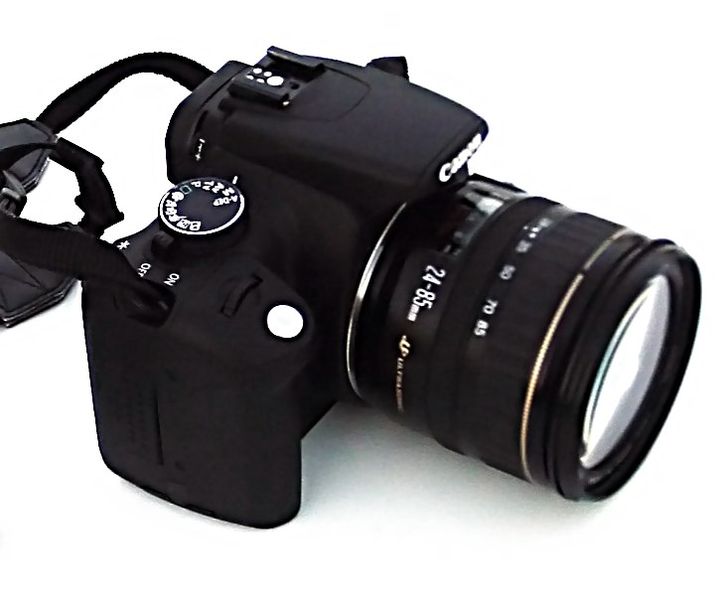
Most product ranges also have an amateur item in its range. For instance, in the digital photography (I still think that's an oxymoron) industry Canon has the Rebel XT, which costs less than some compact digital cameras and provides all the features needed by even professionals, the main disadvantage being the rate and number of photos that can be taken in succession in a single go. I think 8 megapixel is more than enough for a good photo.

So the moral of the story is as follows: If there's something you want to try but you think it will be expensive, ask around first. See if you can rent what you need, or buy second hand, or borrow from a friend. And most of all, do you even need it all?


Words:
"Do you suck at saying "u suck"? A gentleman is always three things:
1) Original
2) Grammatically correct and
3) A gentleman
Call foes something a bit unusual. They'll be thrown if they get it and revealed as an idiot in front of their peers if they don't."
-PC Gamer, April 2007 regarding DefCon


Sunday, 24 August 2008

Guitar Hero III Through The Eyes of a Guitarist

Click to enlarge.Being a guitarist of about 8 years experience, I always scoffed at the prospect of games such as Guitar Hero or Rock Band. I considered it gimmicky, air guitar with a high score even. But a few weeks ago when I was offered an opportunity to play my curiosity got the better of me, so I took hold of the plastic replica Les Paul and selected a difficulty. I chose medium but very quickly moved to hard, because I figured it can't be far enough removed from the basic mechanics of playing as to render me useless. What transpired was a nail-biting and elating few hours that ended in my purchase of the game. I now venture to compare the game with the real thing and how neither is like the other, but the one contributes towards the mastery of the other.

Firstly, I was right in my assumption that the game is like the real thing. You press a chord,and strum the note. You also have a tremolo arm(referred to by its fashionable name of whammy). It feels surprisingly like playing a guitar, although the lack of weight makes it a little tricky to keep stable. To play the songs a certain degree of timing is needed, especially on the more difficult songs where offbeat notes and different time signatures come into play, such as the intro of La Grange.

There are also elements that remove the game from the real thing. The fact that 6 strings and 22 or more frets with an infinite combination is reduced to 5 buttons with no open note(when no note is fretted). The strumming is also turned into more of a button being hammered than the actual motion of strumming. There is also no such things as palm-mutes, an integral part of most rock songs. But my main complaint is that the buttons give no feedback. You need to press them relatively firmly and the only thing telling you where your hand is on the 'fretboard' is a little mark on the middle button. On a real guitar, you can feel a definite edge where your fingertips move over the fret's edge. You know what the strings are doing under your fingers. But this is all a result of taking a fundamentally analogous action and turning it into computer inputs.

Now the bright side. I've come to the conclusion that Guitar Hero, besides being a very fun and addictive game, is also a very good stepping stone to learn to play the guitar.

When you endeavour to learn the art of guitar playing, there's a typical development curve: For the first few weeks you feel like you'll never get it right and it's a waste of time. Then when you get the hang of it, you progress very quickly and you can literally feel and hear yourself improve as you play. Guitar Hero helps to overcome the initial stupidity of learning the guitar. You're going through the motions of your first few guitar lessons, but you don't have to listen to the dull twank sound of your efforts. You're rewarded by a throbbing crowd of cartoon moshers. It's then relatively simple to shift over to a real guitar and 'fill in the gaps'.

I had to think twice about writing the next bit, because it could potentially insult many of my guitar playing friends: Guitar Hero can get you over The Wall. After a few years most guitarists hit a wall where just playing guitar isn't enough anymore and you need to start thinking about the technique and theory behind your playing to progress. Many guitarists are happy to stay by this wall, and turn into the sing-along players at the bonfire on the beach. The guitarists that commit to conquer the wall will end up the riffing superstar that you see in Guitar Hero. This is where techniques such as hammer-ons, pull-offs, sweeps, arpeggio and chord structures become important. The hard and expert levels in Guitar Hero do a very good job of helping you onto this path. The main benefit the game provides is the timing between your hands. I struggled for many a lonely evening to get my right hand to pick at the same speed as my fretting hand presses the notes. The game makes it all part of the progression. When you turn away from the game and pick up a real guitar, you can feel that your hand-to-hand coordination has improved.

The game has it's gimmicky elements, such as the battles where you can break a string on your opponent's guitar, or get their bridge stuck requiring them to furiously manoeuvre the whammy bar. There are also elements in the game that seasoned guitarists will appreciate, such as your star power indicated by a row of valves lighting up as you play and the not-so-subtle placing of name brands such as Line 6 and Mackie.

All in all it's a very fun game that can be enjoyed by anyone with a relative ear for music. I expected the game to hurt my guitar playing by getting me used to buttons instead of strings, but it turns out the game actually helps your playing. Now the only thing I need to get over is the dent on my ego when my friends see me standing with a small plastic Gibson X-plorer(pictured right) draped from my shoulders...


Words:
"We both know that the promise of simulated rock stardom will always bewitch the pasty nabbish fantasies that are gaming's core demographic."
-Zero Punctuation


Sunday, 17 August 2008

The Price of Quality

My mom always says you shouldn't buy cheap because it'll break, and buying twenty cheap frying pans (or whatever) is more expensive than buying a single, expensive one. But how true is this?

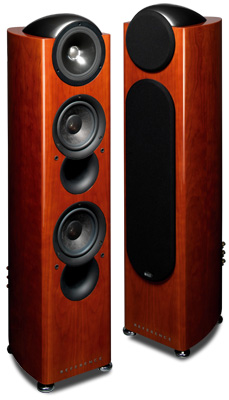
I was watching an episode of The Gadget Show where they compared high-end speakers with incredibly expensive speakers. The end result was pretty even, even though the expensive speakers were more than 30 times the price of the reasonably priced ones. So the question is, exactly how much do you need to spend to get the quality you're looking for?

What I usually do is compare the price with the relative quality of what you're buying, so step one is to find something solid and statistical that you can compare. In the case of cars look at reliability, fuel consumption, get the opinion of other people who own the cars in question on the styling and maintenance. (Don't believe the brochures. They don't lie, but they spin the truth) For something like speakers, look at impudence, response range, volume and sound-to-noise levels. For computer parts such as 3D graphics cards, find a reputable website and get benchmarks. Next, find out what each item in your list will cost. Remember to include setup fees or maintenance plans.

Now set up a little spreadsheet or something and pull a graph. This is the trick part. You'll see that from low-end to mid-range the price will rise slowly but the quality increases dramatically. This is because manufacturers need to make the initial buy-in to produce the item. With cars you don't really have a car unless you've put wheels on it, welded the thing together, gotten it tested, etc. You will then notice at a certain point it levels out, where the price increases steadily as the quality goes up. Then suddenly you'll hit a wall where it becomes very expensive for relatively little gain. This is the cut between mid-range and high-end. When you're looking at cars (once again) the price difference between the normal model and the sport model is often quite a bit, but the performance gain isn't all that major especially if you'll only be commuting with it.

Once you've gotten this graph figured out, you'll have a mental idea of what you're paying for in each iteration. You can then make an educated decision as to what you can afford and if you're getting your money's worth.

I need to mention two things here. Firstly, people tend to decide on a budget and strictly stick to it. I think this is the wrong approach. Many times once I've made up my graph I see that I've either grossly under-budgeted (not realising what things cost) or there's an item just a little more expensive with a quite considerable improvement. Be willing to shift your budget, otherwise you end up buying inferior goods because you're stingy. If you can't afford it right now, but you can wait a month or two and save up, do so. You'll be much happier with your purchase once you make it. Secondly, consider what you're buying for. If you're buying small speakers so you can hear your computer go ding when something happens, you don't need surround sound or a subwoofer. If you're buying speakers for a home entertainment system it's a good idea to look at slightly more expensive speakers, but maybe a better idea to stick to smaller speakers that don't fill your living room.

I find that buying just below the mid-to-high-end cut-off delivers the best results, where products work well but aren't flashy or over the top. On my computer games run reasonably well and I didn't shovel out a fortune for it.

Oh, one last thing. If you're planning on buying something quite expensive like computer parts, something that's in a quickly evolving market, take a look at upcoming products. What you're planning to buy might soon be replaced by a newer model in the same price range with better features. In this case you can either buy the newer model, or you can wait for the shops to drop the price of the current model in order to get rid of it and stock the new. A win-win situation.

Having taken all this into account, I suggest you step back, take a breath, maybe have a cup of something soothing, then buy what feels right. Your subconscious often picks up on little things that you're not thinking of. One of the products might feel cheap in your hands but there's really nothing wrong with it. It's a good buy, but you'll always feel cheated.

One last thing to consider. This item that you're planning to buy... do you actually need it? Or do you just want it? But that's a topic for another day...


Words:
"If ignorance is bliss, why aren't there more happy people in the world?"
-Stephen Fry on QI (Quite Interesting)


Saturday, 2 August 2008

You're Overqualified

Many of us have heard this phrase. It's the excuse they use to get rid of you when there's someone with lower qualifications but greater potential. And by potential I mean influence, or a family member in the company (good read).

But what it really means, and how it became an excuse in the first place, is what I'm discussing here.

When you finally get out of high school and start studying, it's the greatest thing since your driver's licence. You're finally studying for your passion, not just subjects that "will help you later in life". If you're going away from home to study it also brings independence. You can do what you want, when you want. To some degree you can even own what you want because many bursaries and student loans include living expenses. The problem arises a few years later, when you receive your bachelor's. Now you have a decision: Go work, or study further. There are a few arguments to table:
  1. "What if I'm unqualified? Is a bachelor's degree enough?" Many companies and/or lines of work require further study. The more technical it becomes, usually the more specialised your studies need to become. Maybe an honour's degree? Or how about a doctorate?
  2. "I don't have to pay my loan until I start working." Especially if you're from a less privileged household your parents are unwilling to or incapable of paying your loan for you. In many cases the massive debt hanging over your head is a good enough reason to avoid the real world of the middle-class low-income young adult.
  3. "But there's so much more to learn!" Many students get stuck in the academic, working their way up from undergrad to grad to doctor to professor. They then make their living from writing papers on ridiculously focussed and specific subject matters that have no real-world implications other than to advance science in an obscure direction. Many students become apprentices to a professor at their university and later replace the professor.
These are all valid arguments, but are they feasible in a modern world?

I'm a programmer so my knowledge of the work environment is limited to the IT sector, but I think my logic extends to other fields. The most important thing in work isn't theory, it's experience. You can study for years and think you've seen everything, but I guarantee the first day on the job something will happen that you never saw coming. The only way to learn the tricks of the trade is to actually be part of the trade. If your dream job requires more study, I suggest finishing your first qualification and then getting a part-time job in the specific sector to start gaining experience. You can then continue your studies in whatever direction you need.

Often you study something thinking it's your dream career, but as soon as you start working you find out that it's not as glamorous as you thought. If you start working early enough, you won't waste so much time and money studying something you're not really into.

Then there's the counter argument: If experience is so much better than theory, why study at all? Because without any theory you're the temp secretary in the high-tech laboratory. You have no idea what's going on around you. Besides, no-one will take you seriously unless you have something behind your name. If no-one will take you, you will never get your golden "two years experience" that so many of the big players require.

So, to summarise: You need to study something relevant before you start working, but once you have a qualification that can get you a proper job, start working even if it's only part-time. Continue studies if you're interested, but keep tabs on what's needed in your sector and what the big companies are looking for. It doesn't help studying something that you love if it's only going to get you unemployed.


Words:
"I don't trust Apple, I just like them. Very much like dating a supermodel."
-ZA Tech Show: Episode 20


Tuesday, 22 July 2008

Everything is Romantic.

The title will make sense in a few minutes, I promise.

We as a human race are constantly disappointed in our experiences. A new love interest is never as exciting as in your Marian Keyes book. Going to a formula 1 race is never as exciting as watching it on TV, because you miss half the action. Being a hero is never as glamorous as in the movies. Why is this?

Because media and entertainment has made us blunt. Movies and games are constantly trying to make things more real and more fantastic, and it leaves reality behind. If this relates to something we've never experienced ourselves, it shifts our expectations. A car will not spontaneously explode when hit by a train. You can't empty a pistol in someone's chest and they will still be alive, much less be able to chase you, even through kevlar.

I have two things I want to mention with regards to this, one good and one bad.

The good is shows like Mythbusters. A whole form of entertainment based on debunking the misconceptions.

The bad: People's concept of physics is fundamentally flawed. In many cases it could make truly amazing things seem boring, because in a movie you saw it to be much more impressive, even if it was fake. This is a theory called suspension of disbelief. To quote:
"According to the theory, suspension of disbelief is a quid pro quo: the audience tacitly agrees to provisionally suspend their judgement in exchange for the promise of entertainment."
This means you're willing to overlook physics because... well... "Wow! Did you see that!?"

Because of this tendency in people to believe what they see even if it's obviously faked, some lawyers are able to argue that games are harmful to children because of the violence depicted. When playing Postal, you see people rejecting you, the player, because of your deeds.

The end result is the banning of many games in countries with stricter parental control. But the effect is inverted. Because the game is now illegal, it becomes more special and interesting and people will go to greater lengths to play it.

And once they're used to the blood and carnage in this game, the next game will have to be even more gory and gut-wrenching. It's a vicious cycle.

There is no solution to this. Movies and games will always try to be better than the last. The only way the effect can be kept to a minimum is for people to realise it isn't real. We should stop expecting things to be like they are in the movies and just live life. Or better yet, be inquisitive. If you watch a movie and see someone shooting a car and the car explodes, ask yourself if this is possible.

Don't be stupid and go test it! Find out by other means. The chances are that someone has tested the theory under controlled circumstances and published the results.

A good place to start would be Mythbusters.


Words:
"The claims were that Diablo III looked more like World of Warcraft than Diablo. I don't know where these people got their impressions of World of Warcraft, because in all the Diablo III material out there, I have yet to see a bipedal cow in a wedding dress attempt to seduce a pink-haired gnome in the ancient forest of elves."
-Gameplanet Feature


Monday, 14 July 2008

Cellphones = Evil

In this modern world of technology and mobility, you can do almost everything from your cellular phone. Ordering pizza, reading up on facts, cruise around the internet, download and watch feature films... The options are endless. But the one thing nobody seems to be able to do is leave the thing alone.

A colleague came over to my desk earlier and picked up my phone (pictured). It's always lying nearby in case someone is looking for me, but usually once I put it down on my desk I don't touch it. She looked at the phone, turned it over a bit and says: "I like your phone. It's nice and small... Don't like the qwerty keyboard though."

"Why not?"

"I don't like qwerty keyboards," she replies. "I can't type on it while I'm driving 'cause I need to look what I'm doing."

"Why do you need to type on your phone while you're driving?"

She pauses for a second, ignoring the question, pondering. Then continues.

"Rich always gets annoyed with me when I take my phone out in the movies..."

At this point I interrupted her.

Are you that addicted to your phone that you can't even leave it alone for a few hours? And it's not like the phone rang or anything, you just take it out and make sure nobody was looking for you, or even worse, you go onto some social activity site like MXit or Facebook to see how you can keep yourself busy while you're in the movies. What's wrong with this picture? You're in a movie! Why are you looking for something else to do?

It gets worse. Why do you need to type something on your phone while you're driving? Can't it wait until you get to wherever you're going? And if it's important enough not to wait, why don't you pull over and do it? If your phone rings you can answer it and put it straight onto speakerphone without much trouble (my phone you hold down the answer button for a moment and it beeps).

The problem goes deeper than a mere addiction to a device. The cellphone has given people access to alternative activities no matter what they're doing. This means people never concentrate on a single thing at a time. They must always be doing at least two, maybe even three things, which inevitably means they're doing two or three things, half or a third as well as they should or could.

When you take out your phone during a movie, you're not just spoiling the movie for yourself (less immersed, not seeing the good parts, etc.), you're also spoiling it for the 6 or 8 people sitting roughly behind you, who now have to look past a 1000 lumens backlight to get to the screen.

Cellphone users while driving are far worse than drunk drivers, especially because drunk drivers are at least still concentrating on the road.

Think about how much you use your cellphone. I'm sure you can use it alot less.


Words:
'I'm putting together a creature that pretty much Darwin would go: "Hey... um... I'm never taking acid ever again".'
-Robin Williams, playing with Spore Creature Editor


Wednesday, 2 July 2008

Analog to Digital

I've kept the faith for so long, but I knew at some point technology would overtake nostalgia and my beloved SLR camera would be replaced by a digital equivalent.

As with all technology, eventually it will be replaced by something more suitable to our everyday life. The reason I stuck with a film-based camera for so long is called brightness latitude. It's the amount that you can overexpose or underexpose a shot and still be able to recover a good shot from it. The easiest example would be a photo of a candle-lit dinner. If you overexpose the shot your subjects would be well lit, but the candles and the immediate surroundings would "white out", appearing as a bright blob. If you underexpose the shot the candles look great but the table and faces of the people would be in darkness. When working with film, you're transferring light onto a medium. You could then in post-production over- or underexpose certain areas to fix the problem.

An increasingly trendy technique in digital photography known as HDRI has solved this problem. You take 2 identical shots, one under- and the other overexposed. You then overlay the 2 images and select the correctly lit areas from each to create the final image. It's a great trick and can produce some stunning shots, but it usually requires your subject to remain motionless between shots.

Don't get me wrong, digital has its place. You wouldn't want to go all happy snappy at a party with your film camera, simply because it's easier to use a small digital camera. Usually people want to see the picture you just took aswell, and with film you can't show them.

Cheaper digital cameras also don't have a proper viewfinder. You're forced to use the little LCD screen on the back. Any photographer worth their salt will perhaps use the LCD for composition, but will always refer to the proper viewfinder before taking the actual shot. This is why I originally bought an SLR camera, because what you see in the viewfinder is what comes out. With cheaper cameras the viewfinder is slightly offset from the photo lens and can be very annoyingly uncalibrated.

Yesterday I spent about an hour messing with one of the latest dSLR cameras and for the first time I felt like this camera was capable of expressing my ideas the way I want, without holding me back. This notion, coupled with the faster turn-around time and generally digital methodology of almost everything these days, convinced me that the time has come.

Like video killed the radio star, so has digital cameras reshaped our notions of photography.


Words:

"You're much too pretty, you don't need your mind."
- Fallen by Seether (Finding Beauty in Negative Spaces)

Friday, 30 May 2008

Too much caffeine?

Twenty years ago, when you ordered coffee you received a smallish cup (size of a British teacup) of black coffee, with milk or cream on the side. Many people still believe this is how coffee should be served.

Nowadays when you walk into a coffee shop, you first decide what you want to drink. Feel like something classic? How about a latté? What about some simplistic, strong coffee? Americano maybe more your taste? How about something sweet? Mocha? There's an endless array to choose from, often to the confusion of the customer. And what exactly is the difference between an iced mocha and a mocha freeze?

Actually I do know what the difference is: An iced mocha usually contains solid ice cubes, where a mocha freeze gets put through a blender.

Once you've decided what you feel like drinking, you must consider how much of it you'd like. And it's not just small, medium or large. Some idiot thought it would be cool to directly translate the proper Italian titles for the serving sizes, which means you order a short (8 oz), tall (12 oz) or grandé (Italian for big. 16oz). And as if that isn't enough, Starbucks have added venti (Italian for 20, thus 20oz, sometimes 24oz). How can a single person consume that much caffeine, sugar and calories and then want another a few hours later? It's not healthy!

It's a conspiracy, I tell you. Caffeine addiction is the only addiction that's legal, often ignored and in some cases even considered commonplace! Many of the people I've worked beside would frown upon an average working day without at least 4 cups(I mean mugs) of coffee. That's almost 2 litres!

I understand that coffee has its health benefits, but all in good measure! If you have a headache, drinking 4 times the dosage of painkillers doesn't make your head get better 4 times faster. Your average grandé mocha has the same amount of calories as a full meal. Multiply that by 4 and you're sitting with a heart condition.

Think about that next time you go make yourself a cuppa. I can guarantee that if you drink coffee less, you'll enjoy it a lot more.

While I'm on the topic of coffee and Starbucks: I've never met someone who can testify to thinking "Hey he's drinking Starbucks coffee from one of those stylish recycled cups. He must be a pretty stand-up guy." It doesn't happen. Drinking a specific type of coffee rarely makes you cooler than the next guy. And if you drink coffee that can be considered stylish, you wouldn't go flashing it around. Being subtle is often much more effective. And when someone does notice, the effect is much stronger.


Words:

"A moment of calm in your time of anger may save you years of mourning."
-Confucius


Thursday, 31 May 2007

Predictability

Something I've noticed lately is that I tend to predict everything by a few seconds.

It all started with Chess in primary school, where I was taught to think a few steps ahead. I guess I subconsciously found this to be useful in everyday life, because I started predicting everything and anything I could, sort of mentally preparing myself for all the possible options. Like constantly going: "What if this happens? What should I do? How should I react?"

This became abundantly useful when I learnt to drive. Changing across 2 lanes in 1 go is nothing strange to me, because I know where the cars in the far lane are, not just the cars around me.

A relatively common accident on the N1 into town aggravated my mental awareness. I was in the fast lane and needed to turn off at the next offramp, so I looked around and gingerly started changing lanes. Suddenly I just heard a bike rev, I felt something hit my car and I saw him come wobbling past me, promptly followed by my bumper. He regained his balance and pulled onto the shoulder. I obviously pulled off aswell, seeing as I would drive over my own front-end in a few seconds.

Turns out the bike had come from behind and was in my blind spot just as I was changing lanes. Since then I've been even more aware of cars and bikes around me.

Also in conversation I tend to think a few lines of dialogue ahead. Often when you chat with someone you think of something to say, but by the time you have a chance to speak, what you had to say is no longer relevant. I then make a mental note of my reply and wait until the topic is renewed or has died away. This way, you very rarely get awkward silences or say something that has nothing to do with the conversation.

And as a bonus it also makes you seem intelligent.

I was reading an article on "Kaizen" the other day. It is a philosophy that sees improvement in productivity as a gradual and methodical process. Every day you find that little thing that's making you less productive and correct it, concentrating on it the whole day. The next day you find the next thing. This means you never have this feeling that you're inadequate, because you know you are constantly improving.

Maybe that's something we should all learn to do. Evaluate yourself on a daily basis. Ask yourself "What can I do to make myself just a little better?" and take it from there... You can also ask a trusted friend what he or she thinks you need to work on. Body language, annoying habits, using a catch phrase too often or using informal language when in business or formal situations... All these things create a first and lasting impression on people and can be the difference between being taken seriously or blatantly ignored.